Select Page

Global Advisors | Quantified Strategy Consulting

Ethics
Quote: Dr Martin Luther King Jr. – American Baptist minister

Quote: Dr Martin Luther King Jr. – American Baptist minister

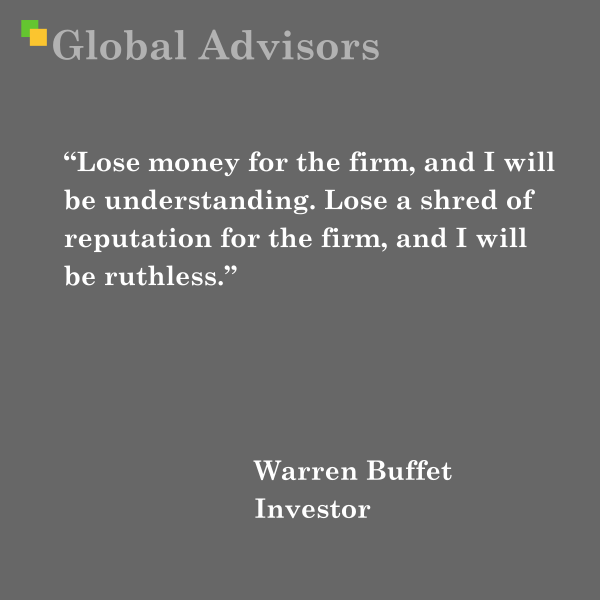
“Darkness cannot drive out darkness: only light can do that. Hate cannot drive out hate: only love can do that.” – Dr Martin Luther King Jr. – American Baptist minister

This line, included in A Testament of Hope: The Essential Writings and Speeches of Martin Luther King, Jr., is not only emblematic of King’s message but also of his lived philosophy—one deeply rooted in Christian ethics and the practice of nonviolence.

Martin Luther King, Jr. (1929–1968) was an American Baptist minister and activist who became the most visible spokesman for the nonviolent civil rights movement from the mid-1950s until his assassination in 1968. King drew extensively from Gospel teachings, particularly the Sermon on the Mount, and from earlier theorists of nonviolent resistance, notably Mohandas Gandhi. He argued that true social transformation could only be achieved through love and reconciliation, not retaliation or hatred. The Testament of Hope anthology, compiled by James Melvin Washington at the request of Coretta Scott King, brings together King’s seminal essays, iconic speeches, sermons, and interviews—showing the evolution of his thought in response to the escalating struggles of the American civil rights movement.

This specific quote reflects King’s insistence on moral consistency: that the means must be as righteous as the ends. It was delivered against the backdrop of violent backlash against civil rights progress, racial segregation, and systemic injustice in the United States. King’s philosophy sought not merely to win legal rights for African Americans, but to do so in a way that would heal society and affirm the dignity of all individuals. The quote serves as a concise manifesto for constructive, rather than destructive, social change—urging individuals and movements to transcend cycles of resentment and to build a community rooted in justice and mutual respect.

Context: Leading Theories and Theorists

Gandhi and the Power of Satyagraha
A cornerstone of King’s intellectual framework was Gandhi’s concept of satyagraha (truth-force) or nonviolent resistance. Gandhi demonstrated that mass movements could challenge colonial oppression without resorting to violence, emphasizing moral authority over physical force. King adapted these principles to the American context, arguing that nonviolence could expose the moral contradictions of segregation and compel a reluctant nation to live up to its democratic ideals.

Christian Ethics and the Social Gospel
King’s theological training at Morehouse College, Crozer Theological Seminary, and Boston University exposed him to the Social Gospel tradition—a movement that sought to apply Christian ethics to social problems. Figures like Walter Rauschenbusch influenced King’s belief that salvation was not merely individual but communal, requiring active engagement against injustice. King’s sermons often invoked biblical parables to argue that love and forgiveness were not passive virtues but powerful forces for societal transformation.

Thoreau and Civil Disobedience
Henry David Thoreau’s essay “Civil Disobedience” also shaped King’s thinking, particularly the idea that individuals have a moral duty to resist unjust laws. However, King went further by tying civil disobedience to a broader strategy of mass mobilisation and moral witness. He argued that nonviolent protest, when met with violent repression, would reveal the brutality of the status quo and galvanise public opinion in favour of reform.

Pacifism and Social Democracy
King’s later writings and speeches reveal a growing engagement with democratic socialist thought, advocating not only for racial equality but also for economic justice. He critiqued both unbridled capitalism and the excesses of state control, positioning himself as a pragmatic reformer seeking to reconcile individual rights with collective welfare. Though less discussed in popular narratives, this aspect of King’s thought underscores his holistic approach to justice—one that integrates personal morality, social ethics, and political strategy.

Insights for Contemporary Consideration

King’s assertion that love and light—not their opposites—are the true agents of change remains pertinent. In an era marked by polarisation, the temptation to meet hostility with hostility is ever-present. King’s legacy, however, suggests that sustainable progress is built not on animosity but on courageous empathy, principled nonviolence, and a steadfast commitment to the common good. His writings compiled in A Testament of Hope continue to challenge us to consider not just what we seek to achieve, but how we pursue it—reminding us that the character of our methods shapes the quality of our outcomes.
read more
Quote: Warren Buffet – Investor

Quote: Warren Buffet – Investor

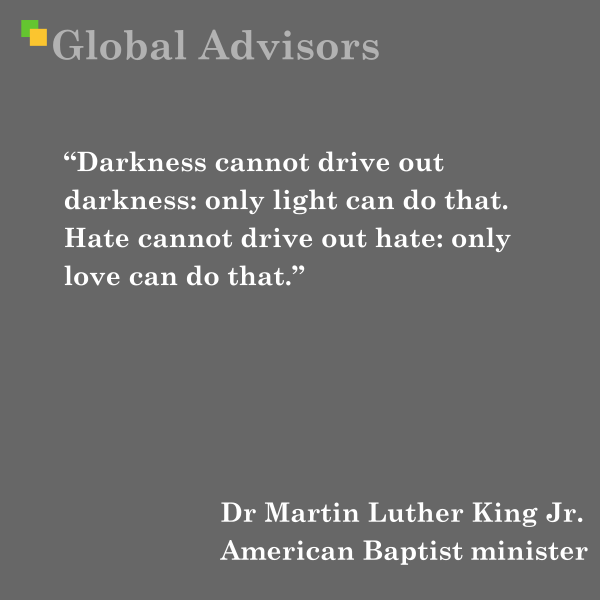
“Lose money for the firm, and I will be understanding. Lose a shred of reputation for the firm, and I will be ruthless.” – Warren Buffet – Investor

The roots of this guidance reach deep into Buffett’s extensive experience as both a legendary investor and a transformative leader, most notably during his tenure as chairman and CEO of Berkshire Hathaway and during his crisis stewardship at Salomon Brothers in the early 1990s.

Historical Context of the Quote

The quote first gained prominence in 1991 amidst the Salomon Brothers bond trading scandal, when Buffett was brought in to stabilise the embattled investment bank. Upon assuming the chairmanship, he delivered this message unequivocally to all staff, signalling that reputation would outweigh even substantial financial loss as the paramount concern. This principle was not a one-off; Buffett has repeatedly conveyed it through biennial memos to his senior management at Berkshire Hathaway, insisting that “the top priority — trumping everything else, including profits — is that all of us continue to zealously guard Berkshire’s reputation”.

Buffett’s approach responds to a fundamental risk in financial and professional services: while monetary losses can often be recouped over time, damage to reputation is typically irreparable and can have far-reaching effects on trust, relationships and long-term business sustainability. He underscores the notion that ethical behaviour and public perception must be held to higher scrutiny than any legal requirement — urging his teams to act only in ways they would be comfortable seeing scrutinised by an “unfriendly but intelligent reporter on the front page of a newspaper”.

Profile: Warren Buffett

Warren Buffett is widely regarded as one of the most successful investors in history, known both for his acumen in capital allocation and his unwavering focus on business integrity. Born in 1930, Buffett began investing as a child and by age 10 had developed a personal ethos centred on security and freedom through financial independence. Over subsequent decades, he built Berkshire Hathaway into a global holding company with interests ranging from insurance to manufacturing, consistently prioritising reputation alongside returns.

Buffett’s leadership style is defined by operational autonomy for his CEOs — but only within the bounds of absolute ethical conduct. Rather than large compliance departments, he champions a culture of integrity, believing “organisational culture,” not policy, is the primary safeguard against reputational risk.

Reputation Management: Theoretical Foundations and Thought Leaders

The foundational importance of reputation in business has been explored by leading theorists across management, economics, and corporate governance.

  • Warren Buffett (Practitioner-Theorist): Buffett’s actions embody the close relationship between reputation, trust and business value, arguing that reputation is a compound asset that underpins all long-term success.

  • Charles Fombrun: A pre-eminent academic in reputation studies, Fombrun formalised the idea of corporate reputation as a key intangible asset in his book Reputation: Realizing Value from the Corporate Image. Fombrun’s work posits that strong reputations differentiate organisations, influence stakeholder decisions, and result in enduring competitive advantage.

  • Robert Eccles: Eccles’ scholarship, especially in the realm of integrated reporting, underlines that transparency and ethical conduct must permeate a firm’s disclosures and operations, not only to satisfy regulators, but also to cultivate trust with investors, customers and the wider community.

  • John Kay: In works such as The Honest Corporation, Kay explores how robust reputational capital shields organisations not only from customer flight, but also from regulatory censure and predatory competitors.

These theorists converge on the conclusion that reputation is both a strategic and ethical asset: difficult to build, easily destroyed, and impossible to replace through mere financial resources. The most effective leaders do not simply avoid misconduct; they actively cultivate an organisational culture in which every decision passes the test of stakeholder scrutiny and enduring trust.

Supporting Case Studies and Illustrations

  • The Salomon Brothers scandal is a classic case in how reputational mismanagement can threaten not just profitability, but organizational survival. Buffett’s actions there, and at Berkshire Hathaway, have been repeatedly cited in academic and professional literature as exemplars for crisis management and corporate culture.

  • Conversely, numerous scandals in financial services illustrate that even robust compliance departments are not a substitute for culture, aligning with Buffett’s observation that “the organisations with the biggest compliance departments… have the most scandals”.

Enduring Relevance

Buffett’s doctrine — ruthless defence of reputation over financial performance — remains highly relevant. It encapsulates hard-won wisdom: trust is the currency with the highest compounding returns in business history, and its loss cannot be reversed by any sum of money.

This philosophy has shaped the approaches of some of the most influential contemporary theorists and corporate leaders, cementing reputation management as an essential pillar of modern strategy and governance.

read more

Download brochure

Introduction brochure

What we do, case studies and profiles of some of our amazing team.

Download

Our latest podcasts on Spotify

Sign up for our newsletters - free

Global Advisors | Quantified Strategy Consulting