| |
|

| |
| |
| |
|
A daily bite-size selection of top business content. |
| |
| |
| |
Quote: Lord Kelvin (William Thomson) - Physicist“When you can measure what you are speaking about, and express it in numbers, you know something about it; but when you cannot measure it...your knowledge is of a meagre and unsatisfactory kind.” - Lord Kelvin (William Thomson)This iconic statement, voiced by Lord Kelvin in the late 19th century during a lecture, elegantly captures the spirit of scientific inquiry in the industrial age. Its context lies at the intersection of theory and practice: scientists and engineers were wrestling with how to systematize knowledge and drive real technological progress. The British Empire, amid the Industrial Revolution, thrived on advances in physics, engineering, and telegraphy, demanding both rigorous theory and practical, measurable outcomes. Kelvin’s philosophy was revolutionary for his time. He argued that true understanding comes not simply from speculation or qualitative insight but must be backed by quantitative measurement. This perspective helped establish the foundation for modern scientific method and engineering practice, where empirical data and precision are paramount. About Lord KelvinWilliam Thomson, 1st Baron Kelvin (1824–1907) was a towering figure in science and engineering. Born in Belfast and educated at Cambridge, Kelvin held the chair of Natural Philosophy at the University of Glasgow for over half a century. His scholarship ranged from mathematical physics to practical engineering, and the breadth of his impact was remarkable:
In 1892, he was elevated to the peerage as Lord Kelvin, the first scientist to be so honoured, choosing his title after the River Kelvin that flows by the University of Glasgow. Leading Theorists and the Science of MeasurementLord Kelvin’s dictum on measurement shaped the work of generations of physicists, engineers, and organizational theorists. Measurement became the keystone of operational science, influencing leading minds far beyond physics:
Together, these theorists built on Kelvin’s insight that measurement is not mere accounting—it is the bedrock of progress in science, engineering, and organizational strategy. The enduring impact of this idea is visible in everything from physics and engineering to business analytics and modern performance management.
|
| |
| |
Term: OKRs - Objectives and Key ResultsOKR (Objectives and Key Results) is a widely used goal-setting framework that enables organizations, teams, and individuals to define clear, aspirational objectives and track their achievement through specific, measurable key results. This approach is designed to bridge the gap between strategy and execution, ensuring that high-level organizational vision gets translated into actionable, quantifiable outcomes. An OKR consists of two main components:
Initiatives often supplement OKRs but are not required; these are the projects and actions taken to influence the achievement of the Key Results. OKRs promote transparency, alignment, and accountability across organizations. They are generally set at the company, team, or individual level and are revisited quarterly or monthly for review and scoring. OKRs vs. KPIs and the Balanced Scorecard
Leading Strategy Theorist Behind OKRs: Andy GroveAndrew S. Grove (1936–2016) is credited as the originator of the OKR framework. Born in Budapest, Hungary, Grove survived Nazi occupation and the Soviet invasion before fleeing to the United States in 1956. He earned a Ph.D. in chemical engineering from the University of California, Berkeley. At Intel, where he was one of the earliest employees and later served as CEO (1987–1998) and Chairman, Grove revolutionized both the company and wider management thinking. In his 1983 classic High Output Management, he documented the use of "iMBO" (Intel Management by Objectives), which provided the foundation for OKRs as they are practiced today. Grove believed that combining ambitious, qualitative objectives with specific, quantitative key results was critical for driving focus, alignment, and acceleration of progress within highly competitive, fast-changing industries. Grove’s methods directly influenced pioneers such as John Doerr, who brought OKRs to Google and played a key role in their widespread adoption in Silicon Valley and beyond. OKRs offer a flexible, transparent alternative or complement to KPIs and tools like the Balanced Scorecard, driving organizational alignment, agility, and focus—an approach rooted in Andy Grove’s philosophy of high performance through clear, measurable ambition.
|
| |
| |
Quote: Robert S. Kaplan and David P. Norton – creators of the Balanced Scorecard approach“Today's organisational value-creating activities are not captured in the tangible, fixed assets of the firm. Instead, value rests in the ideas of people scattered throughout the firm, in customer and supplier relationships, in databases of key information, and cultures of innovation and quality.” - Robert S. Kaplan and David P. Norton - creators of the Balanced Scorecard approachThis statement exemplifies a key shift in modern management thinking championed by Robert S. Kaplan and David P. Norton. Historically, companies measured their worth by physical assets—machinery, buildings, inventory, and other tangible resources. However, by the late 20th century, breakthrough research and business transformations revealed that intangible factors—knowledge, innovation, relationships, and organizational culture—were often the real drivers of sustainable value and competitive advantage. Kaplan and Norton addressed this gap by developing the Balanced Scorecard in the early 1990s, arguing that traditional financial measures alone were insufficient to capture an organisation’s true value-creating processes. Their framework encouraged leaders to assess performance not just in terms of revenue and profit, but also through perspectives such as internal business processes, customer satisfaction, and—critically—the innovation and learning (or learning and growth) perspective. This emphasised how assets like employee expertise, informational capital, and organizational learning drive future performance and adaptability. The quote reflects their conviction that in the knowledge economy, ideas, relationships, and a culture of continuous improvement are at the core of lasting organizational value. Kaplan and Norton’s holistic perspective reshaped global management practices, making companies far more aware of the hidden, intangible strengths that sustain growth and excellence. About Kaplan and Norton: Theorists Shaping Strategy and Measurement Robert S. Kaplan is an influential American academic and Emeritus Professor at Harvard Business School. Trained as an engineer and economist, Kaplan’s early research revolutionised management accounting through innovations like Activity-Based Costing. His engagement with performance measurement deepened when he collaborated with David P. Norton. David P. Norton came from a background combining engineering, business, and consultancy, ultimately crafting a career as a management strategist and executive. Norton’s work translated academic insights into practical tools for organisations across sectors. In 1990, Kaplan and Norton undertook a pioneering research project into how organizations measure performance. Their collaboration resulted in the creation of the Balanced Scorecard—a system designed to link strategy formulation with execution, and to provide executives with a balanced view of their organisation’s progress. Rather than relying on isolated metrics, their model integrates four perspectives: financial, customer, internal processes, and innovation & learning. This approach compels organisations to consider whether they can continually improve and create value, not just deliver short-term results. Over the years, Kaplan and Norton continued to evolve their ideas, expanding the Balanced Scorecard approach into broader theories of strategy maps and organisational alignment. Their joint work has had profound influence, helping leaders around the world realize that a company’s most valuable assets are often those you cannot see on a balance sheet, but that can be measured, nurtured, and leveraged to achieve enduring success.
|
| |

| |
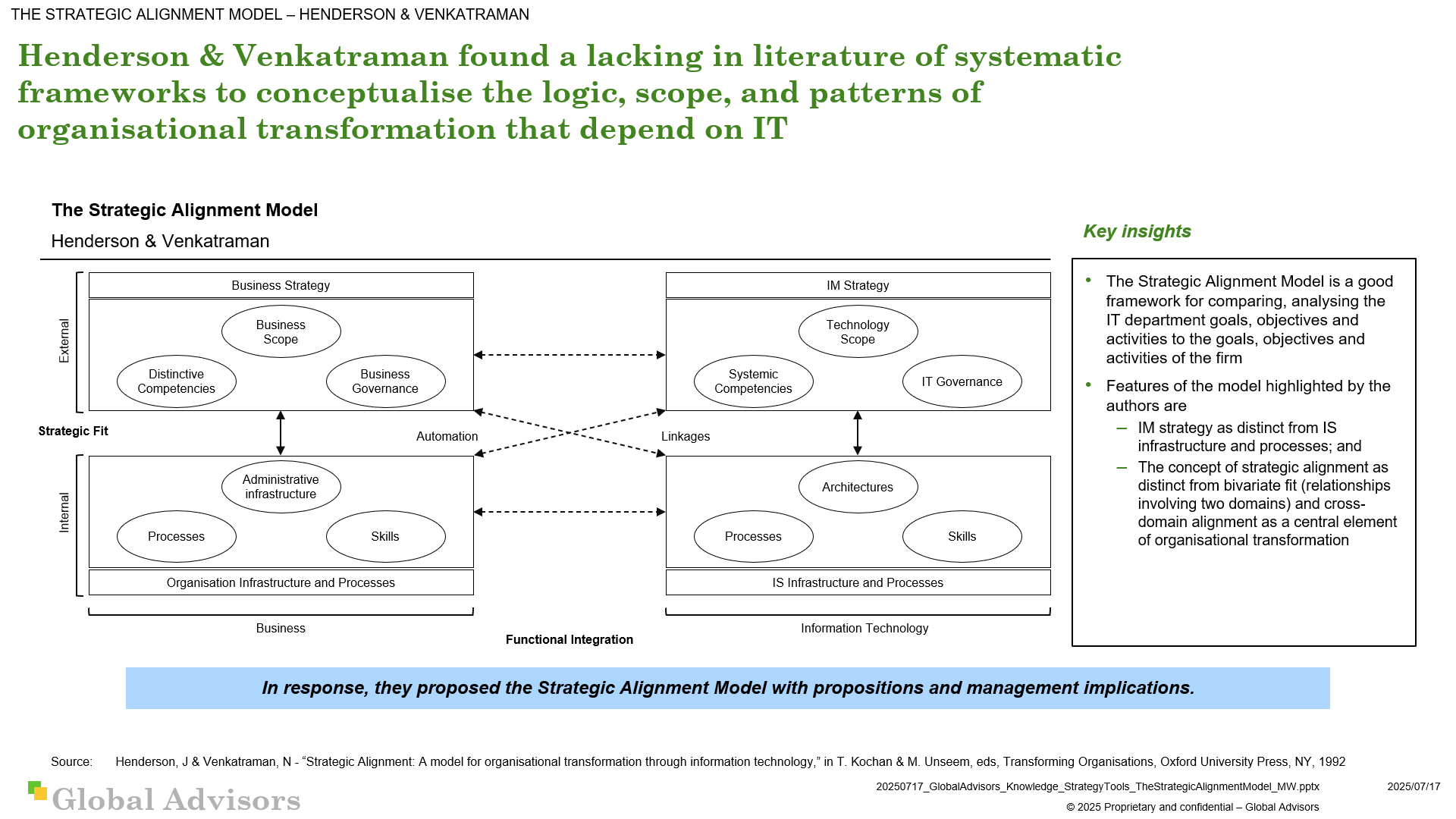
Term: Strategic Alignment ModelThe Strategic Alignment Model (SAM), as defined by Venkatraman and Henderson in the IBM Systems Journal, is a foundational framework for aligning an organization's business strategy and IM strategy to maximize value and achieve sustainable success.
The Strategic Alignment Model (SAM), as defined by Venkatraman and Henderson in the IBM Systems Journal, is a foundational framework for aligning an organization's business strategy and IT strategy to maximize value and achieve sustainable success. Core Components of the Strategic Alignment ModelThe model is structured around four domains—two external and two internal—each representing critical organizational dimensions:
Alignment occurs through two key linkages:
SAM proposes that achieving alignment requires choices across all four domains to be made in parallel, with consistent logic and rationale supporting both strategic formulation and execution. Perspectives on AlignmentVenkatraman and colleagues identify four dominant alignment perspectives for analytic alignment between Business and IT:
Each perspective highlights a different way in which business and IM strategies interact and shape organizational success. Key Theorists: N. Venkatraman and John C. HendersonN. Venkatraman is widely recognized as the principal architect behind the Strategic Alignment Model. His research in information technology, strategy, and organizational transformation helped establish the foundational link between IT investments and business value through effective alignment.
John C. Henderson collaborated extensively with Venkatraman and co-authored the original foundational work presenting the Strategic Alignment Model in the IBM Systems Journal.
Their relationship to the Strategic Alignment Model is that of co-originators. Their joint efforts have made SAM the dominant paradigm for addressing the alignment of business strategies and IT capabilities, profoundly influencing both theory and best practices in corporate strategy and digital transformation. In essence: The Strategic Alignment Model by Venkatraman and Henderson is the pivotal framework guiding organizations in aligning business and IT realms—represented and continuously refined by the scholarly work and deep expertise of these two leading theorists.
|
| |

| |
Quote: Fyodor Dostoevsky - Russian novelist, essayist and journalist"A man who lies to himself, and believes his own lies becomes unable to recognize truth, either in himself or in anyone else, and he ends up losing respect for himself and for others. When he has no respect for anyone, he can no longer love, and, in order to divert himself, having no love in him, he yields to his impulses, indulges in the lowest forms of pleasure, and behaves in the end like an animal. And it all comes from lying - lying to others and to yourself." - Fyodor Dostoevsky - Russian novelist, essayist and journalistFyodor Mikhailovich Dostoevsky (November 11, 1821 – February 9, 1881) was a Russian novelist, essayist, and journalist who explored the depths of the human psyche with unflinching honesty. Born in Moscow to a family of modest means, Dostoevsky’s early life was marked by the emotional distance of his parents and an eventual tragedy when his father was murdered. He trained as a military engineer but pursued literature with relentless ambition, achieving early success with novels such as Poor Folk and The Double. Dostoevsky’s life took a dramatic turn in 1849 when he was arrested for participating in a radical intellectual group. Sentenced to death, he faced a mock execution before his sentence was commuted to four years of hard labor in Siberia followed by military service. This harrowing experience, combined with his life among Russia’s poor, profoundly shaped his worldview and writing. His later years were marked by personal loss—the deaths of his first wife and his brother—and financial hardship, yet he produced some of literature’s greatest works during this time, including Crime and Punishment, The Idiot, Devils, and The Brothers Karamazov. Dostoevsky’s writings are celebrated for their psychological insight and existential depth. He scrutinized themes of morality, free will, faith, and the consequences of self-deception—topics that continue to resonate in philosophy, theology, and modern psychology. His funeral drew thousands, reflecting his status as a national hero and one of Russia’s most influential thinkers. Context of the QuoteThe quoted passage is widely attributed to Dostoevsky, most notably appearing in The Brothers Karamazov, his final and perhaps most philosophically ambitious novel. The novel, published in serial form shortly before his death, wrestles with questions of faith, doubt, and the consequences of living a lie. The quote is spoken by the Elder Zosima, a wise and compassionate monk in the novel. Zosima’s teachings in The Brothers Karamazov frequently address the dangers of self-deception and the importance of spiritual and moral honesty. In this passage, Dostoevsky is warning that lying to oneself is not merely a moral failing, but a fundamental corruption of perception and being. The progression—from dishonesty to self-deception, to the loss of respect for oneself and others, and ultimately to the decay of love and humanity—paints a stark picture of spiritual decline. This theme is central to Dostoevsky’s work: characters who deceive themselves often spiral into psychological and moral crises. Dostoevsky saw truth—even when painful—as a prerequisite for authentic living. His novels repeatedly show how lies, whether to oneself or others, lead to alienation, suffering, and a loss of authentic connection. Leading Theorists on Self-DeceptionWhile Dostoevsky is renowned in literature for his treatment of self-deception, the theme has also been explored by philosophers, psychologists, and sociologists. Below is a brief overview of leading theorists and their contributions: Philosophers
Psychologists
Modern Thinkers
Legacy and InsightDostoevsky’s insights into the dangers of self-deception remain remarkably relevant today. His work, together with that of philosophers and psychologists, invites reflection on the necessity of honesty—not just to others, but to oneself—for psychological health and authentic living. The consequences of failing this honesty, as Dostoevsky depicts, are not merely moral, but existential: they impact our ability to respect, love, and ultimately, to live fully human lives. By placing this quote in context, we see not only the literary brilliance of Dostoevsky but also the enduring wisdom of his diagnosis of the human condition—a call to self-awareness that echoes through generations and disciplines.
|
| |
| |
Term: Balanced ScorecardThe Balanced Scorecard is a strategic planning and management system that provides organizations with a comprehensive framework to drive performance and implement strategy. Unlike traditional performance metrics that focus solely on financial outcomes, the Balanced Scorecard emphasizes a balanced view by integrating both financial and non-financial measures. At its core, the Balanced Scorecard helps organizations:
The framework divides performance measurement into four key perspectives:
Within each perspective, organizations define:
The Balanced Scorecard has become a widely adopted tool across sectors—including corporate, government, and non-profit—due to its ability to offer a holistic approach to performance management and strategic alignment. Leading Theorists: Robert S. Kaplan & David P. NortonThe Balanced Scorecard concept was developed in the early 1990s by Dr. Robert S. Kaplan and Dr. David P. Norton. Their work stemmed from a Harvard Business Review article published in 1992, which addressed the limitations of relying solely on financial metrics for organizational performance. Robert S. Kaplan:Dr. Kaplan is an American academic, Emeritus Professor of Leadership Development at the Harvard Business School, and a leading authority on management accounting and performance measurement. After earning degrees from M.I.T. and Cornell, Kaplan spent much of his career researching managerial accounting innovations and co-introduced Activity-Based Costing before collaborating on the Balanced Scorecard. David P. Norton:Dr. Norton earned an engineering undergraduate degree from Worcester Polytechnic Institute and later an MBA from Florida Institute of Technology. He built his career as a business executive, management consultant, and co-founder of several performance management firms. Norton partnered with Kaplan to combine academic rigor and practical consultancy experience, shaping the Balanced Scorecard into a methodology that organizations worldwide could implement. Kaplan and Norton’s joint research into strategy execution revealed that organizations often struggled to operationalize their strategies and link performance measures with long-term objectives. With the Balanced Scorecard, they provided a solution that bridges the gap between strategic planning and operational execution, establishing a system that empowers organizations to continually review and refine their path to success. Their legacy includes not only the Balanced Scorecard but also later contributions on strategy maps and organizational alignment, setting global standards in performance management theory and practice.
|
| |

| |
Quote: Brené Brown - researcher, storyteller and professor“Today I choose courage over comfort.” - Brené Brown - researcher, storyteller and professorBrené Brown, a research professor, author, and renowned speaker, is celebrated worldwide for her groundbreaking work on vulnerability, courage, shame, and empathy. This quote encapsulates her core philosophy: that true growth—whether personal, relational, or professional—comes not from staying safe within our comfort zones, but from making the conscious decision to face discomfort and uncertainty with bravery. Brown’s landmark research revealed that vulnerability is not a weakness, but the greatest measure of courage. She explored these ideas in bestsellers like Daring Greatly, The Gifts of Imperfection, and Rising Strong, inspiring millions across the globe to lead more authentic, whole-hearted lives. Her now-famous TED Talk, “The Power of Vulnerability,” has become a touchstone in conversations about human connection and resilience. The context for “Today I choose courage over comfort” can be found throughout Brown’s writings and lectures. For Brown, integrity is defined by the willingness to act with courage even when it's uncomfortable, choosing what is right over what is easy. In her book Rising Strong, she writes:
Brown consistently emphasizes that vulnerability and courage are inextricably linked—there is no courage without uncertainty and emotional risk. Whether addressing leaders, entrepreneurs, or anyone striving for meaningful change, she challenges us to “show up, be seen, and live brave” even when endurance is hard. About Brené Brown: Pioneers in the Field of Courage and Vulnerability Brown’s work builds upon and amplifies insights from earlier theorists who explored courage, authenticity, and human flourishing:
Together, these theorists shaped the understanding that thriving requires more than talent or intelligence—it demands the willingness to be vulnerable, to stumble, and to rise stronger. Resonance of the Quote “Today I choose courage over comfort” stands as a daily reminder to honour our values, even when ease and avoidance tempt us. Brown’s legacy is the call to action: Lead with heart. Embrace discomfort. Make the brave choice—not just once, but day after day, in ways that transform lives, organizations, and communities.
|
| |

| |
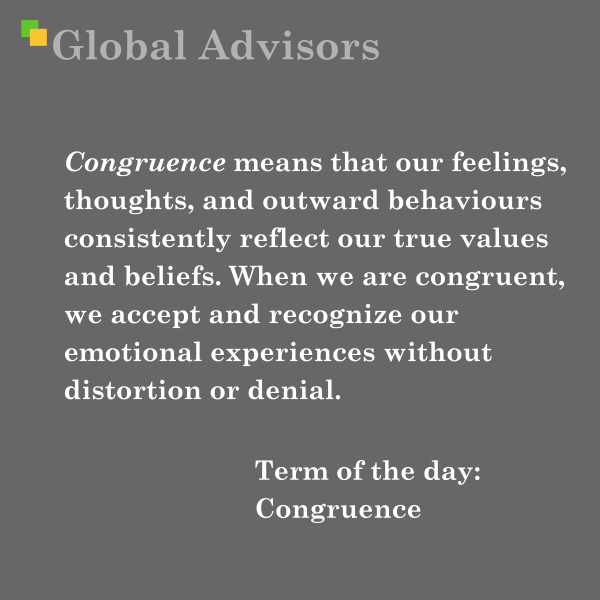
Term: CongruenceCongruence, as defined by Carl Rogers, is a state of alignment or harmony between an individual’s self-concept (their real self) and their ideal self (who they wish to be). Rogers developed this term within his humanistic approach to psychology in the 1950s, making it a central tenet of person-centered therapy. Congruence means that our feelings, thoughts, and outward behaviours consistently reflect our true values and beliefs. When we are congruent, we accept and recognize our emotional experiences without distortion or denial. This internal unity leads to authenticity and a sense of well-being, as our actions and communications transparently match our internal state.
Rogers was clear that perfect congruence is rare; most people fluctuate between states of congruence and incongruence. Striving towards greater congruence, however, supports mental health, self-esteem, resilience, and deeper relationships. Rogers emphasized that congruence is enabled by experiences of unconditional positive regard: being valued by others without conditions leads people to accept themselves and, over time, align their ideal and real selves.
Related Strategy Theorist: Abraham Maslow Backstory and Theoretical Relationship Abraham Maslow is the most significant related theorist when it comes to congruence, particularly through his concept of self-actualization. Maslow, like Rogers, was a founder of humanistic psychology. Self-actualization refers to the fulfilment of one’s unique potential and the desire to become everything one is capable of becoming. Maslow placed this at the pinnacle of his Hierarchy of Needs, suggesting that after basic physiological and psychological needs are met, individuals are driven to realize their true selves—a state highly congruent with Rogers’ congruence. Maslow’s work on authenticity, growth, and inner motivation provided a broader societal and organizational context for Rogers’ ideas. While Rogers delved into therapy and the individual’s emotional life, Maslow examined what congruent living looks like in leadership, creativity, and strategic action. His studies of exemplary individuals (like Abraham Lincoln and Eleanor Roosevelt) showcased that the most successful people are deeply congruent: they live by deeply held principles, are comfortable with themselves, and integrate their personal and professional actions around their genuine values. Biography: In summary, both Rogers and Maslow emphasized that living congruently—not just knowing our values but embodying them in action—is essential for authentic growth, psychological health, and strategic clarity.
|
| |
| |
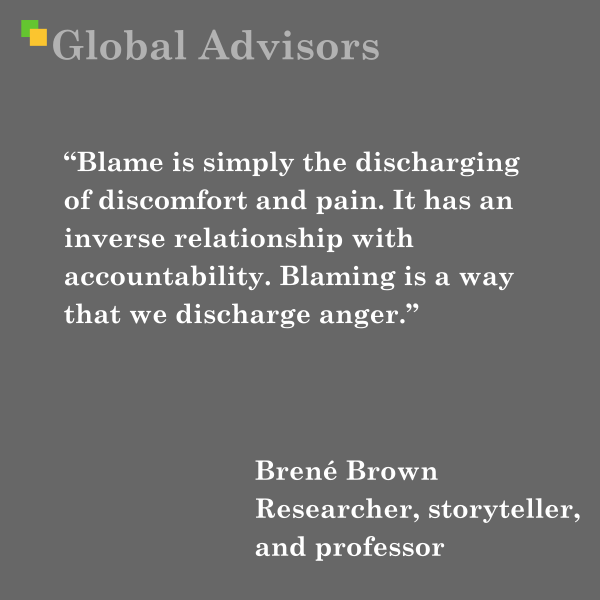
Quote: Brené Brown - researcher, storyteller and professor“Blame is simply the discharging of discomfort and pain. It has an inverse relationship with accountability. Blaming is a way that we discharge anger.” - Brené Brown - researcher, storyteller, and professorThe quote emerges from Brené Brown’s extensive research into vulnerability, emotional intelligence, and the social dynamics of blame and accountability. As a renowned research professor, author, and speaker, Brown has spent decades exploring how people respond to adversity, shame, and imperfection, particularly in contexts that demand courage and connection. This particular insight derives from Brown’s exploration of why people instinctively assign blame when confronted with pain or anger. Rather than solving problems or fostering growth, blame offers a false sense of relief—it shifts discomfort outward and temporarily soothes our own emotional turmoil. However, as Brown’s research demonstrates, blame is ultimately counterproductive; it consumes energy that could be spent on honest self-reflection and constructive dialogue, undermining the very possibility of real change or learning. Brown shares candid, sometimes humorous stories about her own “blamer” tendencies, illuminating the universal nature of these behaviours and the courage required to break the cycle. She emphasizes that accountability—facing our role in situations, admitting mistakes, and communicating openly—demands vulnerability and resilience. True accountability opens the door to empathy, growth, and trust, while habitual blame keeps us defensive and disconnected. Brown’s work on this subject has become foundational for leaders, educators, and organizations that prioritize psychological safety and high-functioning teams. Her call is not simply to reduce blame, but to build cultures where compassionate responsibility and honest conversations replace finger-pointing and shame. The Person Behind the Quote: Brené BrownBrené Brown is a research professor at the University of Houston and a visiting professor at the University of Texas at Austin McCombs School of Business. She is the author of multiple New York Times bestsellers, including Daring Greatly, The Gifts of Imperfection, and Dare to Lead, and is widely recognized for her TED talk, “The Power of Vulnerability,” which has been viewed by millions worldwide. Brown’s career is distinguished by her focus on vulnerability, courage, authenticity, and shame. Her work bridges rigorous academic research with practical guidance, helping individuals and organizations harness the power of difficult emotions to foster deeper connection and greater innovation. Her thoughtful insights into the dynamics of blame and accountability have reshaped conversations in business, education, healthcare, and public service. Leading Theorists Related to Blame and AccountabilityThe study of blame, accountability, and emotional process has roots in multiple fields, from psychology to conflict resolution. Notable contributors include:
Together, these theorists—along with Brown’s own influential voice—have illuminated the traps of reflexive blame and the transformative potential of compassionate accountability. Their collective work speaks to a universal truth: To create lasting change and connection, we must be willing to move beyond blame, confront vulnerability, and embrace responsibility.
|
| |
| |
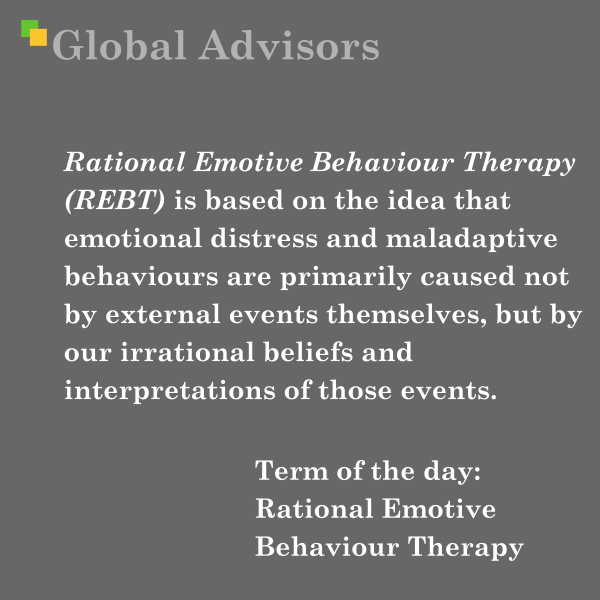
Term: Rational Emotive Behaviour Therapy (REBT)Rational Emotive Behaviour Therapy (REBT) is a pioneering, action-oriented form of Cognitive Behavioral Therapy (CBT) developed by psychologist Albert Ellis in the 1950s. At its core, REBT is based on the idea that emotional distress and maladaptive behaviors are primarily caused not by external events themselves, but by our irrational beliefs and interpretations of those events. REBT aims to help individuals identify, challenge, and replace irrational beliefs with more realistic, flexible, and rational ones, leading to healthier emotions and behaviours. The therapy centers around the ABC model, which illustrates this process:
For example, a person who does not receive a response to a message may irrationally believe, “They must not like me; I’ll always be alone” (B), leading to feelings of anxiety or depression (C). REBT works to dismantle such irrational beliefs and replace them, for instance, with, “Maybe they’re busy; one unanswered message does not define my worth.” Key principles of REBT include:
REBT is particularly valuable for those dealing with anxiety, depression, anger, guilt, shame, perfectionism, and relationship or performance issues. The therapy is active, directive, and pragmatic, focusing on present thoughts and behaviors to produce meaningful, lasting change. Albert Ellis: The Leading Theorist and His Relationship to REBT Albert Ellis (1913–2007) was an American psychologist and one of the most influential figures in modern psychotherapy. Dissatisfied with the slower pace and interpretative nature of psychoanalysis—which he originally practiced—Ellis developed REBT as a more practical and empirically grounded approach to psychological well-being. Driven by the insight that patients’ suffering was more often rooted in dysfunctional thinking rather than external circumstances, Ellis began systematically teaching clients how to recognize, dispute, and replace their irrational beliefs. His approach was revolutionary in that it placed the responsibility for emotion and behavior squarely on the individual's beliefs, empowering clients to take control of their internal narratives and emotional responses. Ellis's impact extends far beyond the therapy room. His work provided the foundational principles for the broader family of cognitive-behavioral therapies (CBT)—including Aaron T. Beck’s cognitive therapy—transforming how psychological disorders are understood and treated worldwide. Over his career, Ellis published more than 75 books and authored hundreds of articles, becoming known for his direct style, wit, and unwavering commitment to helping people confront their self-defeating beliefs. He famously stated:
Ellis’s legacy lives on in the tens of thousands of clinicians and millions of clients who continue to benefit from the clear, rational, and compassionate principles of REBT.
|
| |
| |
|


| |
| |