| |
|

| |
| |
| |
|
Our selection of the top business news sources on the web. |
| |
| |
| |
Quote: Michael E Porter"The underlying principles of strategy are enduring, regardless of technology or the pace of change." - Michael E Porter - Harvard ProfessorMichael E. Porter on Enduring Strategic PrinciplesMichael E. Porter's assertion that underlying strategic principles remain constant despite technological disruption and market acceleration reflects his foundational belief that competitive advantage is rooted in timeless economic logic rather than operational trends1,3,5. The Quote's Foundation and ContextPorter developed this perspective across decades of research at Harvard Business School, culminating in frameworks that have become the intellectual foundation of business strategy globally1. The quote encapsulates a critical distinction Porter makes: while the methods and pace of business change dramatically with technological innovation, the fundamental logic of how organizations compete does not3,5. This assertion emerges from Porter's core definition of strategy itself: a plan to achieve sustainable superior performance in the face of competition5. Superior performance, Porter argues, derives from two immutable sources—either commanding premium prices or establishing lower cost structures than rivals—regardless of whether a company operates in a factory, a digital platform, or an emerging metaverse5. The underlying principle remains unchanged; only the execution vehicle evolves1. Porter's Revolutionary Framework: Three Decades of InfluenceIn the early 1980s, Porter proposed what would become one of business's most enduring intellectual contributions: Porter's Generic Strategies1. Rather than suggesting companies could succeed through luck or serendipity, Porter identified three distinct competitive postures—cost leadership, differentiation, and focus (later refined to four strategies when focus was subdivided)1,2. What made Porter's framework revolutionary was not merely its categorization but its insistence on commitment: a company must select one strategy and execute it exclusively1. This directly contradicted decades of conventional wisdom that suggested businesses should excel simultaneously at being cheap, unique, and specialized. Porter argued this "Middle of the Road" approach was inherently unstable and would result in competitive mediocrity1. The principle underlying this strategic requirement transcends any particular era: focus and coherence create competitive strength; diffusion creates vulnerability1. This principle applied equally in 1982 (when Walmart exemplified cost leadership) and today, when digital-native companies must still choose whether to compete primarily on price or differentiation1,2. The Deeper Logic: Value Chains and Competitive ForcesPorter's subsequent work expanded this foundational insight through additional frameworks that reveal why strategic principles endure. His concept of the value chain—the sequence of activities through which companies create and deliver value—operates on a principle that transcends technology: every business must perform certain functions (sourcing materials, manufacturing, marketing, distribution, service) and can gain advantage by performing them better or more cost-effectively than rivals7. When automation, digitalization, or artificial intelligence emerges, companies still must navigate this basic reality. Technology may transform how value chain activities are performed, but the principle that competitive advantage flows from superior execution of value-creating activities persists3,7. Similarly, Porter's Five Forces framework—analyzing competitive intensity through suppliers, buyers, substitutes, new entrants, and rivalry—identifies structural forces that shape industry profitability3,7. These forces remain economically relevant whether an industry faces disruption or stability. A startup entering a market still faces the fundamental dynamics of supplier bargaining power and threat of substitutes; technology changes the specifics, not the underlying logic3. The Strategic Imperative: Trade-Offs and DistinctivenessCentral to Porter's philosophy is the concept of strategic trade-offs—the recognition that choosing one competitive path necessarily means sacrificing others5. A company pursuing cost leadership must accept lower margins per unit and simplified offerings; a differentiation strategist must accept higher costs to fund innovation and premium positioning1,2,5. This principle, too, transcends eras. The trade-off principle operated when Henry Ford chose standardized mass production over customization, and it operates today when Netflix chose streaming breadth over theatrical release control. Technology may change what trade-offs are possible, but the necessity of making meaningful choices endures5. Porter identifies five tests for a compelling strategy, the most fundamental being a distinctive value proposition—a clear answer to why a customer would choose you5. This requirement is utterly independent of technological context. Whether a business operates in retail, software, healthcare, or education (sectors to which Porter has successfully applied his frameworks), the strategic imperative remains: articulate a unique, defensible reason for your existence and organize all activities around that clarity1,5. Leading Theorists and the Strategic LineagePorter's frameworks emerged from and contributed to a broader evolution in strategic thought. His work built upon earlier organizational theory while simultaneously reframing how practitioners understood competition1,3. His insistence on the primacy of industry structure and competitive positioning (rather than internal resources alone) shaped subsequent schools of strategic thought. Later scholars would develop the resource-based view of strategy, emphasizing unique capabilities, which Porter's concept of competitive advantage already implicitly contained5. The intellectual rigor of Porter's approach—grounding strategy in economic logic rather than management fashion—has made his frameworks remarkably resistant to obsolescence1. When business theory cycled through emphases on quality management, reengineering, benchmarking, and digital transformation, Porter's fundamental frameworks remained relevant because they address the eternal question: In the face of competition, how does a company create value that customers will pay for?3,4,5 Why This Quote Matters TodayPorter's assertion that underlying principles endure addresses a specific anxiety of contemporary leadership: the fear that digital disruption, AI, and accelerating change have invalidated established wisdom. His quote offers intellectual reassurance grounded in rigorous analysis—the reassurance that while execution methods must evolve, the strategic logic remains constant3,5. A company in 2026 deploying AI must still answer the questions Porter posed in 1980: What is our distinctive competitive position? Are we competing primarily on cost or differentiation? Have we organized our entire value chain to reinforce that choice? Are we creating barriers that prevent rivals from copying our approach?1,5 The technology changes; the strategic imperative does not. This constancy of principle amidst technological change represents Porter's most enduring intellectual contribution—not because his frameworks are perfect (they have rightful critics), but because they are grounded in the persistent economic realities that define business competition1,3. References 1. https://www.ebsco.com/research-starters/marketing/porters-generic-strategies 2. https://miro.com/strategic-planning/what-are-porters-four-strategies/ 3. https://www.isc.hbs.edu/strategy/Pages/strategy-explained.aspx 4. https://cs.furman.edu/~pbatchelor/mis/Slides/Porter%20Strategy%20Article.pdf 5. https://www.sachinrekhi.com/michael-porter-on-developing-a-compelling-strategy 6. https://hbr.org/1996/11/what-is-strategy 7. https://hbsp.harvard.edu/product/10303-HBK-ENG 8. https://www.hbs.edu/ris/download.aspx?name=20170524+Strategy+Keynote_+v4_full_final.pdf
|
| |
| |
Quote: Dario Amodei - CEO, Anthropic"There's no reason we shouldn't build data centers in Africa. In fact, I think it'd be great to build data centers in Africa. As long as they're not owned by China, we should build data centers in Africa. I think that's a great thing to do." - Dario Amodei - CEO, AnthropicIn a candid interview with Dwarkesh Patel on 13 February 2026, Dario Amodei, CEO and co-founder of Anthropic, articulated a bold vision for expanding AI infrastructure into Africa. This statement underscores his broader concerns about securing AI leadership against geopolitical rivals, particularly China, while harnessing untapped opportunities in emerging markets.1,3,5 Who is Dario Amodei?Dario Amodei is a leading figure in artificial intelligence, serving as CEO and co-founder of Anthropic, a public benefit corporation focused on developing reliable, interpretable, and steerable AI systems. Prior to Anthropic, Amodei was Vice President of Research at OpenAI, where he contributed to the development of seminal models like GPT-2 and GPT-3. Before that, he worked as a senior research scientist at Google Brain. His departure from OpenAI in 2021 stemmed from a commitment to prioritise safety and responsible development, which he felt was not being adequately addressed there.3 Amodei is renowned for his 'doomer' perspective on AI risks, likening advanced systems to 'a country of geniuses in a data centre'-vast networks of superhuman intelligence capable of outperforming humans in tasks like software design, cyber operations, and even relationship building.3,4,5 This metaphor recurs in his writings, such as the essay 'Machines of Loving Grace,' where he balances enthusiasm for AI's potential abundance with warnings of existential dangers if not managed properly.6 Under Amodei's leadership, Anthropic has pioneered initiatives like mechanistic interpretability research-to peer inside AI models and understand their decision-making-and a Responsible Scaling Policy (RSP). The RSP, inspired by biosafety levels, mandates escalating security measures as model capabilities grow, positioning Anthropic as a leader in AI safety.3 The Context of the QuoteAmodei's remark emerged amid discussions on AI's infrastructure demands and geopolitical strategy. He has repeatedly stressed the need for the US and its allies to build data centres aggressively to maintain primacy in AI, warning that delays could prove 'ruinous.'1 In the same interview and related forums, he advocated cutting chip supplies to China and constructing facilities in friendly nations to prevent adversaries from commandeering infrastructure.3 This aligns with his recent essay 'The Adolescence of Technology,' a 19,000-word manifesto outlining AI as a 'serious civilisational challenge.' There, Amodei calls for progressive taxation to distribute AI-generated wealth, AI transparency laws, and proactive policies to avert public backlash-warning tech leaders, 'You're going to get a mob coming for you if you don't do this in the right way.'2 He dismisses some public fears, like data centres' water usage, as overstated, pivoting instead to long-term abundance.2 The Africa focus counters narratives of exclusionary AI growth. Amodei argues against sidelining developing nations, proposing data centres there as a win-win: boosting local economies while diluting China's influence in critical infrastructure.7 Leading Theorists on AI Infrastructure, Geopolitics, and DevelopmentAmodei's views build on foundational thinkers in AI safety and geopolitics:
These theorists collectively shape the discourse on AI as both an economic boon and a strategic vulnerability, with infrastructure as the linchpin.1,2,3 Implications for Global AI StrategyAmodei's advocacy highlights Africa's potential in the AI race: abundant renewable energy, growing digital economies, and strategic neutrality. Yet challenges persist, including energy demands, regulatory hurdles, and security risks. His vision promotes inclusive growth, ensuring AI benefits extend beyond superpowers while safeguarding against authoritarian capture.7 References 3. https://www.cfr.org/event/ceo-speaker-series-dario-amodei-anthropic 4. https://www.euronews.com/next/2026/01/28/humanity-needs-to-wake-up-to-ai-threats-anthropic-ceo-says 5. https://www.dwarkesh.com/p/dario-amodei-2 6. https://www.darioamodei.com/essay/machines-of-loving-grace 8. https://time.com/7372694/ai-anthropic-market-energy-impact/
|
| |
| |
Quote: Dolf van den Brink - Heineken International, CEO"Digitalization in general and AI specifically will be an important part of ongoing productivity savings." - Dolf van den Brink - Heineken International, CEOWhen Dolf van den Brink articulated his conviction that "digitalization in general and AI specifically will be an important part of ongoing productivity savings," he was speaking from a position of hard-won experience navigating one of the beverage industry's most challenging periods. As CEO of Heineken, van den Brink has spent nearly six years steering the world's largest brewing company through unprecedented disruption-from pandemic-induced market collapse to shifting consumer preferences and intensifying competitive pressures. His statement reflects not merely technological optimism, but a pragmatic assessment of survival and growth in an industry facing structural headwinds. The Context: Crisis as Catalyst for TransformationVan den Brink assumed the CEO role in June 2020, at precisely the moment when COVID-19 had devastated global beer markets. Hospitality venues shuttered, on-premise consumption evaporated, and the industry faced existential questions about its future. Rather than merely weathering the storm, van den Brink seized the opportunity to fundamentally reimagine Heineken's operating model. He introduced the EverGreen strategy-first EverGreen 2025, then the more ambitious EverGreen 2030-which positioned technological innovation and operational efficiency as central pillars of the company's response to market contraction. The urgency behind van den Brink's emphasis on digitalization and AI becomes clearer when examining the commercial realities he confronted. Heineken announced plans to cut up to 6,000 jobs-approximately 7% of its global workforce-over two years as beer demand continued to slow. This was not a temporary adjustment but a structural response to a market that had fundamentally changed. Consumer preferences were shifting towards premium products, health-conscious alternatives, and experiences rather than volume consumption. Simultaneously, the company's share price declined by approximately 20% during his tenure, reflecting investor concerns about the company's ability to navigate these transitions. In this context, van den Brink's focus on digitalization and AI represented a strategic imperative: how to maintain profitability and competitiveness whilst reducing headcount and adapting to lower overall demand. Technology became the mechanism through which Heineken could do more with less-automating routine processes, optimising supply chains, enhancing decision-making through data analytics, and improving customer engagement through digital channels. The Intellectual Foundations: Productivity Theory and Digital TransformationVan den Brink's conviction about AI and digitalization as productivity drivers aligns with broader economic theory and business practice that has evolved significantly over the past two decades. The intellectual foundations for this perspective rest on several key theorists and frameworks: Erik Brynjolfsson and Andrew McAfee, economists at MIT, have been among the most influential voices articulating how digital technologies and artificial intelligence drive productivity gains. In their seminal work "The Second Machine Age" (2014) and subsequent research, they documented how digital technologies create exponential rather than linear improvements in productivity. Unlike previous waves of mechanisation that primarily affected manual labour, digital technologies and AI can augment cognitive work-the domain where knowledge workers, managers, and professionals operate. Brynjolfsson and McAfee's research demonstrated that organisations investing heavily in digital transformation whilst simultaneously restructuring their workforce around these technologies achieved the highest productivity gains. This framework directly informed how leading industrial companies, including brewers, approached their digital strategies. Klaus Schwab, founder of the World Economic Forum, popularised the concept of the "Fourth Industrial Revolution" or Industry 4.0, which emphasises the convergence of digital, physical, and biological technologies. Schwab's framework highlighted how AI, the Internet of Things, cloud computing, and advanced analytics would fundamentally reshape manufacturing and supply chain operations. For a company like Heineken, with complex global operations spanning brewing, distribution, logistics, and retail engagement, Industry 4.0 principles offered a comprehensive roadmap for modernisation. Smart factories, predictive maintenance, demand forecasting powered by machine learning, and automated quality control became not futuristic concepts but immediate operational imperatives. Michael E. Porter, the Harvard strategist, developed the concept of "competitive advantage" through operational excellence and differentiation. Porter's framework suggested that in mature industries facing commoditisation pressures-precisely Heineken's situation in many markets-companies must pursue operational excellence through technology adoption. Porter's later work on digital strategy emphasised that technology adoption was not merely about cost reduction but about fundamentally reimagining value chains. This intellectual foundation validated van den Brink's approach: digitalization was not simply about cutting costs through automation but about creating new sources of competitive advantage. Satya Nadella, CEO of Microsoft, has articulated a particularly influential vision of how AI augments human capability rather than simply replacing it. Nadella's concept of "AI-assisted productivity" suggests that the most effective implementations combine human judgment with machine intelligence. This perspective proved particularly relevant for Heineken, where decisions about product development, market strategy, and customer relationships require human insight that AI can enhance but not replace. Van den Brink's framing of AI as contributing to "productivity savings" rather than simply "job elimination" reflects this more nuanced understanding. The Specific Application: Heineken's Digital ImperativeWithin Heineken specifically, van den Brink's emphasis on digitalization and AI addressed several concrete operational challenges: Supply Chain Optimisation: Brewing and beverage distribution involve complex logistics across hundreds of markets. AI-powered demand forecasting, route optimisation, and inventory management could significantly reduce waste, improve delivery efficiency, and lower transportation costs-all critical in an industry where margins had compressed. Manufacturing Excellence: Modern breweries generate vast quantities of operational data. Machine learning algorithms could identify patterns in production processes, predict equipment failures before they occur, and optimise resource utilisation. This was particularly important as Heineken consolidated production capacity in response to lower demand. Customer Intelligence: Digital channels provided unprecedented insight into consumer behaviour. AI could personalise marketing, optimise pricing strategies, and identify emerging consumer trends faster than traditional market research. This capability was essential as Heineken competed with craft brewers, premium brands, and non-alcoholic alternatives. Workforce Transformation: Rather than simply eliminating jobs, digitalization could redeploy workers from routine tasks towards higher-value activities-innovation, customer engagement, strategic analysis. This aligned with van den Brink's vision of EverGreen as a transformation strategy, not merely a cost-cutting exercise. The Broader Industry ContextVan den Brink's perspective on AI and digitalization was not idiosyncratic but reflected a broader consensus among beverage industry leaders. The global beer market faced structural headwinds: declining per-capita consumption in developed markets, health-consciousness trends, regulatory pressures around alcohol, and intensifying competition from alternative beverages. Within this context, every major brewer-from AB InBev to Diageo to Molson Coors-pursued aggressive digital transformation programmes. Van den Brink's articulation of this strategy was distinctive primarily in its candour and its integration with broader organisational restructuring. The Personal Dimension: Leadership Under PressureVan den Brink's statement about AI and digitalization must also be understood within the context of his personal experience as CEO. In interviews, he described the unique pressures of the role-the "damned if you do, damned if you don't" dilemmas that reach the CEO's desk. The decision to pursue aggressive digitalization and workforce reduction was precisely this type of dilemma: necessary for long-term competitiveness but painful in its immediate human and organisational consequences. Van den Brink's emphasis on AI as a tool for "productivity savings" rather than simply "job cuts" reflected his attempt to frame these difficult decisions within a narrative of progress and transformation rather than decline and retrenchment. Notably, van den Brink announced his departure as CEO effective 31 May 2026, after nearly six years in the role. His decision to step down came shortly after launching EverGreen 2030 and amid the company's ongoing restructuring. Whilst the official announcement emphasised his desire to hand over leadership as the company entered a new phase, industry observers noted that the 20% decline in Heineken's share price during his tenure and the company's failure to meet margin targets may have influenced his decision. His conviction about AI and digitalization remained unshaken-indeed, he agreed to remain available to Heineken as an adviser for eight months following his departure-but the emotional and psychological toll of navigating the industry's transformation had evidently taken its measure. Conclusion: Technology as Necessity, Not ChoiceWhen van den Brink asserted that "digitalization in general and AI specifically will be an important part of ongoing productivity savings," he was articulating a conviction grounded in economic theory, industry practice, and hard commercial reality. For Heineken and the broader beverage industry, AI and digitalization were not optional enhancements but essential responses to structural market changes. Van den Brink's leadership-and his ultimate decision to step aside-reflected the immense challenge of stewarding a legacy industrial company through technological and market transformation. His emphasis on AI as a driver of productivity savings represented both genuine strategic conviction and an attempt to frame necessary but difficult organisational changes within a narrative of progress and modernisation. References 1. https://www.marketscreener.com/news/ceo-of-heineken-n-v-to-step-down-on-31-may-2026-ce7e58dadb8bf02c 2. https://www.biernet.nl/nieuws/heineken-ceo-dolf-van-den-brink-treedt-af-in-mei-2026 4. https://www.businesswise.nl/leiderschap/waarom-dolf-van-den-brink-echt-stopt-ceo-heineken~78bcf1d 5. https://www.emarketer.com/content/heineken-cut-6000-jobs-beer-demand-slows
|
| |
| |
Quote: David Solomon"Goldman Sachs' culture is unique, but I would also say it's constantly changing. You'd better be working at defining what you want it to be, constantly reshaping it, and amplifying what you think really matters." - David Solomon - Goldman Sachs CEODavid Solomon, Chairman and CEO of Goldman Sachs, shared this insight during an interview with Sequoia's Brian Halligan on 18 December 2025. The remark underscores his philosophy on organisational culture amid rapid transformation at the firm, particularly under the "Goldman Sachs 3.0" initiative focused on AI-driven process re-engineering.1,5 Solomon became CEO in October 2018 and Chairman in January 2019, succeeding Lloyd Blankfein. He brought a reputation for transformative leadership, advocating modernisation, flattening hierarchies, and integrating technology across operations. Key reforms include "One Goldman Sachs," which breaks down internal silos to foster cross-disciplinary collaboration; real-time performance reviews; loosened dress codes; and raised compensation for programmers.1 His leadership style-pragmatic, unsentimental, and data-driven-emphasises process optimisation and open collaboration. Under Solomon, Goldman has accelerated its pivot to technology, automating trading operations, consolidating platforms, and committing substantial resources to digital transformation. The firm spent $6 billion on technology in 2025, with AI poised to impact software development most immediately, enabling "high-value people" to expand the firm's footprint rather than reduce headcount.3,1 The quote reflects intense business pressures: regulatory uncertainty, rebounding capital flows into China, and a backlog of M&A activity. AI efficiency gains allow frontline teams to refocus on advisory, origination, and growth. Solomon's personal pursuits, such as his career as DJ D-Sol performing electronic dance music, highlight his defiance of Wall Street conventions and commitment to cultural renewal.1,2,4 David Solomon: A ProfileDavid M. Solomon's 40-year career in finance began in high-yield credit markets at Drexel Burnham and Bear Stearns, before rising through Goldman Sachs. Known for blending deal-making acumen with innovation, he has overseen integration of AI and fintech, workforce adaptations, and sustainable finance initiatives. His net worth is estimated between $85 million and $200 million in 2025.2,4 Solomon views experience as "hugely underrated" and a key differentiator, stressing its necessity alongside technological evolution. He anticipates AI will make productive people more productive, growing headcount over the next decade while automating rote tasks.3,5 Leading Theorists on Organisational Culture, Change, and AI-Driven ProductivitySolomon's vision aligns with foundational thinkers in management, economics, and AI:
These theorists form an intellectual lineage where culture is dynamic, leadership proactive, and technology a catalyst for human potential. Solomon synthesises this into practice: sustainable advantage comes from empowering skilled individuals via AI, redeploying resources for growth amid disruption.1 References 1. https://globaladvisors.biz/2025/11/05/quote-david-solomon-goldman-sachs-ceo-5/ 2. https://globaladvisors.biz/2025/10/31/quote-david-solomon-goldman-sachs-ceo-4/ 3. https://www.businessinsider.com/david-solomon-ai-goldman-sachs-high-value-people-2025-10 4. https://globaladvisors.biz/2025/10/15/quote-david-solomon-goldman-sachs-ceo-2/ 6. https://www.youtube.com/watch?v=XAt9vv192Ig
|
| |
| |
Term: Quantum computing"Quantum computing is a revolutionary field that uses principles of quantum mechanics, like superposition and entanglement, to process information with qubits (quantum bits) instead of classical bits, enabling it to solve complex problems exponentially faster than traditional computers." - Quantum computingKey Principles
Quantum computers require extreme conditions, such as near-absolute zero temperatures, to combat decoherence - the loss of quantum states due to environmental interference. They excel in areas like cryptography, drug discovery, and artificial intelligence, though current systems remain in early development stages. Best Related Strategy Theorist: David DeutschDavid Deutsch, widely regarded as the father of quantum computing, is a British physicist and pioneer in quantum information science. Born in 1953 in Haifa, Israel, he moved to England as a child and studied physics at the University of Oxford, earning his DPhil in 1978 under David Sciama. Deutsch's seminal contribution came in 1985 with his paper 'Quantum theory, the Church-Turing principle and the universal quantum computer', published in the Proceedings of the Royal Society. He introduced the concept of the universal quantum computer - a theoretical machine capable of simulating any physical process, grounded in quantum mechanics. This work formalised quantum Turing machines and proved that quantum computers could outperform classical ones for specific tasks, laying the theoretical foundation for the field. Deutsch's relationship to quantum computing is profound: he shifted it from speculative physics to a viable computational paradigm by demonstrating quantum parallelism, where superpositions enable simultaneous evaluation of multiple inputs. His ideas influenced algorithms like Shor's for factoring and Grover's for search, and he popularised the many-worlds interpretation of quantum mechanics, linking it to computation. A fellow of the Royal Society since 2008, Deutsch authored influential books like The Fabric of Reality (1997) and The Beginning of Infinity (2011), advocating quantum computing's potential to unlock universal knowledge creation. His vision positions quantum computing not merely as faster hardware, but as a tool for testing fundamental physics and epistemology. Tags: quantum computing, term, qubit References 1. https://www.spinquanta.com/news-detail/how-does-a-quantum-computer-work 2. https://qt.eu/quantum-principles/ 3. https://www.ibm.com/think/topics/quantum-computing 4. https://thequantuminsider.com/2024/02/02/what-is-quantum-computing/ 5. https://www.mckinsey.com/featured-insights/mckinsey-explainers/what-is-quantum-computing 6. https://en.wikipedia.org/wiki/Quantum_computing 7. https://www.bluequbit.io/quantum-computing-basics 8. https://www.youtube.com/watch?v=B3U1NDUiwSA
|
| |
| |
Quote: Richard Feynman"I think it's much more interesting to live not knowing than to have answers which might be wrong." - Richard Feynman - American PhysicistRichard Phillips Feynman (1918-1988) was not merely a theoretical physicist who won the Nobel Prize in Physics in 1965; he was a philosopher of science who fundamentally reshaped how we understand the relationship between knowledge, certainty, and intellectual progress.4 His assertion that it is "much more interesting to live not knowing than to have answers which might be wrong" emerged not from pessimism or intellectual laziness, but from decades spent at the frontier of quantum mechanics, where the universe itself seemed to resist absolute certainty.1 This deceptively simple statement encapsulates a radical departure from centuries of Western philosophical tradition. For much of intellectual history, the pursuit of knowledge was framed as a quest for absolute truth-immutable, unchanging, and complete. Feynman inverted this paradigm. He recognised that in modern physics, particularly in quantum mechanics, absolute certainty was not merely difficult to achieve; it was fundamentally impossible. The very act of observation altered the observed system. Particles existed in superposition until measured. Heisenberg's uncertainty principle established mathematical limits on what could ever be simultaneously known about a particle's position and momentum.1 Rather than viewing this as a failure of science, Feynman celebrated it as liberation. "I have approximate answers and possible beliefs and different degrees of uncertainty about different things, but I am not absolutely sure of anything," he explained.2 This was not a confession of weakness but a description of intellectual maturity. He understood that the willingness to hold beliefs provisionally-to remain open to revision in light of new evidence-was the engine of scientific progress. The Philosophical Foundations: From Popper to FeynmanFeynman's epistemology was deeply influenced by, and in turn influenced, the broader philosophical movement known as falsificationism, championed most notably by Karl Popper. Popper had argued in the 1930s that the hallmark of scientific knowledge was not its ability to prove things true, but its ability to be proven false. A scientific theory, in Popper's view, must be falsifiable-there must exist, at least in principle, an experiment or observation that could demonstrate it to be wrong.1 This framework perfectly aligned with Feynman's temperament and his experience in physics. He famously stated: "One of the ways of stopping science would be only to do experiments in the region where you know the law. In other words we are trying to prove ourselves wrong as quickly as possible, because only in that way can we find progress."1 This was not mere rhetoric; it described his actual working method. When investigating the Challenger Space Shuttle disaster in 1986, Feynman did not seek to confirm existing theories about the O-ring failure-he systematically tested them, looking for ways they might be wrong. The philosophical tradition Feynman drew upon also included the logical positivists of the Vienna Circle, though he was often critical of their more rigid formulations. Where they sought to eliminate metaphysics entirely through strict empirical verification, Feynman recognised that imagination and speculation were essential to science-provided they remained "consistent with everything else we know."1 This balance between creative hypothesis and rigorous testing defined his approach. The Personal Genesis: A Father's LessonFeynman's comfort with uncertainty was not innate; it was cultivated. In his autobiographical reflections, he recounted a formative childhood moment with his father. Walking together, his father pointed to a bird and said, "See that bird? It's a Spencer's warbler." Feynman's father then proceeded to name the same bird in Italian, Portuguese, Chinese, and Japanese. "You can know the name of that bird in all the languages of the world," his father explained, "but when you're finished, you'll know absolutely nothing whatever about the bird. You'll only know about humans in different places, and what they call the bird. So let's look at the bird and see what it's doing-that's what counts."1 This lesson-the distinction between naming something and understanding it-became foundational to Feynman's entire intellectual life. It taught him that genuine knowledge required engagement with reality itself, not merely with linguistic or symbolic representations of reality. This insight would later inform his famous critique of education systems that prioritised memorisation over comprehension, and his broader scepticism of received wisdom. The Quantum Revolution: Where Certainty Breaks DownFeynman came of age as a physicist during the quantum revolution of the 1920s and 1930s. The old Newtonian certainties-the idea that if one knew all the initial conditions of a system, one could predict its future state with perfect precision-had been shattered. Werner Heisenberg's uncertainty principle, Erwin Schrödinger's wave equation, and Niels Bohr's complementarity principle all pointed to a universe fundamentally resistant to complete knowledge.1 Rather than viewing this as a tragedy, Feynman saw it as an opportunity. "In its efforts to learn as much as possible about nature, modern physics has found that certain things can never be 'known' with certainty," he observed. "Much of our knowledge must always remain uncertain. The most we can know is in terms of probabilities."1 This was not a limitation imposed by human ignorance but a feature of reality itself. Feynman's own contributions to quantum electrodynamics-work for which he shared the 1965 Nobel Prize-were built on this foundation. His Feynman diagrams, those elegant pictorial representations of particle interactions, were tools for calculating probabilities, not certainties. They embodied his philosophy: science progresses not by achieving absolute knowledge but by developing increasingly accurate probabilistic models of how nature behaves. The Intellectual Humility of the ExpertOne of Feynman's most penetrating observations concerned the paradox of specialisation in modern intellectual life. "In this age of specialisation men who thoroughly know one field are often incompetent to discuss another," he noted. "The old problems, such as the relation of science and religion, are still with us, and I believe present as difficult dilemmas as ever, but they are not often publicly discussed because of the limitations of specialisation."1 This critique was not directed at specialists themselves but at the illusion of certainty that specialisation could foster. A physicist might know quantum mechanics with extraordinary precision yet remain profoundly uncertain about questions of meaning, purpose, or ethics. Feynman's comfort with not knowing extended across disciplinary boundaries. He did not pretend to have answers to metaphysical questions. "I don't feel frightened by not knowing things, by being lost in a mysterious universe without any purpose, which is the way it really is, as far as I can tell," he said.4 This stance was radical for its time and remains so. In an era of increasing specialisation and the proliferation of confident expert pronouncements, Feynman's willingness to say "I don't know" was countercultural. Yet it was precisely this intellectual humility that made him such an effective scientist and communicator. He could engage with uncertainty without anxiety because he understood that uncertainty was not the enemy of knowledge-it was knowledge's truest form. The Broader Intellectual Context: Uncertainty as Epistemological VirtueFeynman's philosophy of uncertainty resonated with and contributed to broader intellectual currents of the late 20th century. The philosopher Thomas Kuhn's work on scientific paradigm shifts, published in 1962, suggested that scientific progress was not a smooth accumulation of certain truths but a series of revolutionary transformations in how we understand the world. Feynman's emphasis on the provisional nature of scientific knowledge aligned perfectly with Kuhn's framework. Similarly, the rise of systems thinking and complexity theory in the latter half of the 20th century vindicated Feynman's insight that many phenomena resist simple, certain explanation. Weather systems, biological organisms, and economic markets all exhibit behaviour that can be modelled probabilistically but never predicted with certainty. Feynman's comfort with approximate answers and degrees of uncertainty proved prescient. In the philosophy of science, Feynman's approach anticipated what would later be called "scientific realism with a modest epistemology"-the view that science does describe real features of the world, but our descriptions are always provisional, approximate, and subject to revision. This position steers between naive empiricism (the belief that observation gives us direct access to truth) and radical scepticism (the belief that we can know nothing with confidence). The Practical Implications: How Uncertainty Drives DiscoveryFeynman's philosophy was not merely abstract; it had concrete implications for how science should be conducted. If certainty were the goal, scientists would naturally gravitate toward problems they already understood, testing variations within established frameworks. But if the goal is to discover new truths, one must venture into regions of uncertainty. "One of the ways of stopping science would be only to do experiments in the region where you know the law," Feynman insisted.1 This principle guided his own research. His work on quantum electrodynamics emerged from grappling with infinities that appeared in calculations-apparent contradictions that suggested the existing framework was incomplete. Rather than dismissing these infinities as mathematical artefacts, Feynman and his colleagues (including Julian Schwinger and Sin-Itiro Tomonaga) developed renormalisation techniques that transformed apparent failures into triumphs of understanding. His later investigations into the nature of biological systems, his curiosity about consciousness, and his willingness to explore unconventional ideas all flowed from this same principle: interesting questions lie at the boundaries of current knowledge, in regions of uncertainty. The comfortable certainties of established doctrine are intellectually sterile. The Psychological Dimension: Freedom from FearWhat distinguished Feynman's position from mere agnosticism or scepticism was his emotional relationship to uncertainty. "I don't feel frightened by not knowing things," he declared.4 This was crucial. Many people intellectually accept that certainty is impossible but remain psychologically uncomfortable with that fact. They seek false certainties-ideologies, dogmas, or oversimplified narratives-to alleviate the anxiety of genuine uncertainty. Feynman had transcended this psychological trap. He found uncertainty liberating rather than threatening. This freedom allowed him to think more clearly, to follow evidence wherever it led, and to change his mind when warranted. It also made him a more effective teacher and communicator, because he could acknowledge the limits of his knowledge without defensiveness. This psychological dimension connects Feynman's philosophy to existentialist thought, though he would likely have resisted that label. The existentialists-Sartre, Camus, and others-had grappled with the vertigo of a universe without inherent meaning or predetermined essence. Camus, in particular, had argued that one must imagine Sisyphus happy, finding meaning in the struggle itself rather than in guaranteed outcomes. Feynman's comfort with uncertainty and purposelessness echoed this sensibility, though grounded in the specific context of scientific inquiry rather than existential philosophy more broadly. Legacy and Contemporary RelevanceIn the decades since Feynman's death in 1988, his philosophy of uncertainty has only grown more relevant. The rise of artificial intelligence, the complexity of climate science, and the challenges of pandemic response have all demonstrated the limits of certainty in addressing real-world problems. Decision-makers must act on incomplete information, probabilistic forecasts, and models known to be imperfect approximations of reality. Moreover, in an age of misinformation and ideological polarisation, Feynman's insistence on intellectual humility offers a corrective. Those most confident in their certainties are often those most resistant to evidence. Feynman's willingness to say "I don't know" and to remain open to revision is a model for intellectual integrity in uncertain times. His philosophy also challenges the contemporary cult of expertise and the demand for definitive answers. In fields from medicine to economics to public policy, there is often pressure to project certainty even when the underlying science is genuinely uncertain. Feynman's example suggests an alternative: one can be rigorous, knowledgeable, and authoritative whilst remaining honest about the limits of one's knowledge. The quote itself-"I think it's much more interesting to live not knowing than to have answers which might be wrong"-thus represents far more than a pithy observation about epistemology.1,2,3,4 It encapsulates a comprehensive philosophy of knowledge, a psychological stance toward uncertainty, and a practical methodology for scientific progress. It reflects decades of engagement with quantum mechanics, philosophy of science, and the human condition. And it remains, more than three decades after Feynman's death, a profound challenge to our contemporary hunger for certainty and our discomfort with ambiguity. References 1. https://todayinsci.com/F/Feynman_Richard/FeynmanRichard-Knowledge-Quotations.htm 2. https://www.goodreads.com/quotes/8411-i-think-it-s-much-more-interesting-to-live-not-knowing 3. https://www.azquotes.com/quote/345912 4. https://historicalsnaps.com/2018/05/29/richard-feynman-dealing-with-uncertainty/ 5. https://steemit.com/feynman/@truthandanarchy/feynman-on-not-knowing
|
| |
| |
Quote: William Shakespeare - Romeo and Juliet"Come, gentle night; come, loving, black-browed night; Give me my Romeo; and, when I shall die, Take him and cut him out in little stars, And he will make the face of heaven so fine That all the world will be in love with night..." - William Shakespeare - Romeo and JulietThis evocative passage, spoken by Juliet in Act 3, Scene 2 of Romeo and Juliet, captures the intensity of her longing for Romeo amid the shadows of their forbidden love. As she awaits her secret husband on their wedding night, Juliet invokes the night not as a mere absence of light, but as a loving companion - 'loving, black-browed night' - that will deliver Romeo to her arms. The imagery escalates to a cosmic vision: upon her death, she imagines Romeo transformed into stars, adorning the heavens so brilliantly that the world falls enamoured with the night itself1,4. This soliloquy underscores the play's central tension between passionate desire and impending doom, blending erotic anticipation with morbid foreshadowing. Context within Romeo and JulietRomeo and Juliet, written by William Shakespeare around 1595-1596, is a tragedy of star-crossed lovers whose feud-torn families - the Montagues and Capulets - doom their romance in Verona. The quote emerges at a pivotal moment: Juliet, alone in her chamber, expresses impatience for night to fall after their clandestine marriage officiated by Friar Lawrence. Earlier, in the famous balcony scene (Act 2, Scene 2), their love ignites with celestial metaphors - Romeo likens Juliet to the sun, while she cautions against swearing by the inconstant moon1,2. Here, Juliet reverses the imagery, embracing night's embrace, highlighting love's transformative power even in darkness5. The speech foreshadows the lovers' tragic end, where death indeed claims Romeo, echoing Juliet's starry prophecy in a bitterly ironic twist2. William Shakespeare: The Bard of Love and TragedyWilliam Shakespeare (1564-1616), often called the Bard of Avon, was an English playwright, poet, and actor whose works revolutionised literature. Born in Stratford-upon-Avon, he joined London's theatre scene in the late 1580s, co-founding the Lord Chamberlain's Men (later King's Men). By 1599, they built the Globe Theatre, where Romeo and Juliet likely premiered. Shakespeare penned 39 plays, 154 sonnets, and narrative poems, exploring human emotions with unparalleled depth. His portrayal of love in Romeo and Juliet draws from Italian novellas like Matteo Bandello's and Arthur Brooke's 1562 poem, but infuses them with poetic innovation. Critics note his shift from Petrarchan conventions - idealised, unrequited love - to mutual, all-consuming passion, making the play a cornerstone of romantic literature1,2. Shakespeare's personal life remains enigmatic; married to Anne Hathaway with three children, rumours of affairs persist, yet his genius lies in universalising private yearnings. Leading Theorists and Critical Perspectives on Love in Romeo and JulietShakespearean scholarship on Romeo and Juliet has evolved, with key theorists dissecting its themes of love, fate, and passion. Harold Bloom, influential critic in Shakespeare: The Invention of the Human (1998), praises Juliet's 'boundless as the sea' speech (near this quote) as revealing divine mysteries, elevating the play beyond mere tragedy to metaphysical romance1. Northrop Frye, in Anatomy of Criticism (1957), views the lovers' passion as archetypal 'romantic comedy gone tragic,' where love defies social barriers yet succumbs to ritualistic fate. Feminist critics like Julia Kristeva analyse Juliet's agency; her invocation of night subverts patriarchal control, asserting erotic autonomy2. Stephen Greenblatt, New Historicist pioneer, contextualises the play amid Elizabethan anxieties over youth rebellion and arranged marriages, noting Friar Lawrence's moderate-love warning as societal caution1. Earlier, Samuel Taylor Coleridge (19th century) lauded Shakespeare's psychological realism, contrasting Romeo's immature Rosaline obsession with mature Juliet devotion2. Modern views, per SparkNotes, highlight love's dual force: liberating yet destructive, with Juliet's grounded eroticism balancing Romeo's fantasy2. These theorists affirm the quote's enduring power, blending personal ecstasy with universal peril. Lasting Legacy and Thematic ResonanceJuliet's plea transcends its Elizabethan origins, symbolising love's ability to illuminate darkness. Performed worldwide, adapted into ballets, films like Baz Luhrmann's 1996 version, and referenced in popular culture, it evokes Valentine's Day romance while warning of passion's perils. In Shakespeare's canon, it exemplifies his mastery of iambic pentameter and metaphor, inviting endless interpretation on desire's celestial and mortal bounds3,5. References 1. https://booksonthewall.com/blog/romeo-and-juliet-love-quotes/ 2. https://www.sparknotes.com/shakespeare/romeojuliet/quotes/theme/love/ 3. https://www.folger.edu/blogs/shakespeare-and-beyond/20-shakespeare-quotes-about-love/ 4. https://www.goodreads.com/quotes/tag/romeo-and-juliet 5. https://www.audible.com/blog/quotes-romeo-and-juliet 6. https://www.azquotes.com/quotes/topics/romeo-and-juliet-love.html 7. https://www.shakespeare-online.com/quotes/shakespeareonlove.html
|
| |

| |
Quote: Ilia Malinin - US Figure Skating Olympian"No matter what I'm doing... I am always thinking to be creative and to keep myself in a mindset of always trying to do things either differently, or always trying to level myself up creatively," - Ilia Malinin - US Figure Skating OlympianAt just 21 years old, Ilia Malinin has already redefined what is possible in men's figure skating. The American skater, known colloquially as the "Quad God" for his unprecedented mastery of quadruple jumps, represents a new generation of athletes who refuse to accept the boundaries of their sport. His philosophy of perpetual creative evolution-the conviction that excellence demands constant reinvention-offers insight into not merely how elite athletes train, but how they think about their craft and their place within it. The Rise of a Technical RevolutionaryMalinin's ascent has been meteoric. Born on 2 December 2004, he inherited a competitive pedigree; both his parents competed in the Olympics and accumulated 17 national championships between them in Uzbekistan.2 Yet rather than rest on familial laurels, Malinin charted his own path, winning the U.S. national juvenile championship in 2016 at an age when most skaters are still learning fundamental techniques.6 The defining moment of his early career came in September 2022, when Malinin became the first skater in history to successfully land a quadruple Axel in international competition.2,3 This achievement was not merely a technical milestone; it represented a philosophical shift in figure skating. Where previous generations had viewed certain jumps as theoretical impossibilities, Malinin approached them as problems awaiting creative solutions. By the 2023 Grand Prix Final in Beijing, he had progressed further still, becoming the first skater to perform all six types of quadruple jumps in a single competition.2 His trajectory from junior to senior competition was the fastest in 26 years. In 2024, he won the World Championships-a feat that would typically require years of senior-level experience-and successfully defended his title in 2025, becoming the first American man to win back-to-back world titles since Nathan Chen's three-peat from 2018 to 2021.3 By the 2025-26 Grand Prix Final, Malinin had set a free skate record of 238.24 points, demonstrating that his technical innovations were translating into measurable competitive advantage.2 The Philosophy of Creative Problem-SolvingMalinin's quoted reflection on creativity reveals the intellectual architecture beneath his technical achievements. His insistence on "always thinking to be creative" and maintaining "a mindset of always trying to do things either differently" speaks to a fundamental understanding: that sport at the highest level is not merely about executing established techniques with greater precision, but about expanding the very definition of what the sport permits. This philosophy aligns with contemporary thinking in sports psychology and performance science. The concept of "deliberate practice," popularised by psychologist K. Anders Ericsson, emphasises that elite performance requires not rote repetition but continuous engagement with novel challenges that push the boundaries of current capability.1 Malinin's approach-constantly seeking to "level himself up creatively"-embodies this principle. Rather than perfecting a fixed repertoire of jumps, he systematically explores new combinations, new approaches to existing techniques, and new ways of integrating technical difficulty with artistic expression. His comment that he is "always thinking" about creativity, regardless of context, suggests a cognitive orientation that extends beyond the ice. This mirrors observations made by other high-performing athletes across disciplines: that excellence requires a mindset that is perpetually engaged, perpetually questioning, perpetually seeking improvement. It is not a mode one switches on during competition; it becomes a habitual way of processing experience. Technical Innovation as Creative ExpressionIn figure skating, the distinction between technical and artistic merit has historically been maintained through separate scoring systems. Yet Malinin's career demonstrates how technical innovation can itself be a form of creativity. When he became the first athlete to land all six types of quadruple jumps in a single programme during the 2025 World Championships, he was not simply executing jumps; he was composing a new kind of athletic narrative.2 This represents a departure from earlier eras of figure skating, when technical difficulty and artistic interpretation were often viewed as competing priorities. Malinin's generation treats them as complementary. The difficulty of a quadruple Axel is not incidental to its artistic power; the difficulty is part of what makes it artistically compelling. The risk, the precision required, the sheer human audacity of attempting something that had never been done before-these elements constitute a form of creative expression. His signature move, the "raspberry twist," exemplifies this fusion. It is simultaneously a technical element (requiring specific body control and positioning) and an artistic statement (a playful, personality-driven flourish that distinguishes his skating from that of his competitors). When Malinin "playfully threw a couple of jabs at a TV camera while skating off the ice" following his short programme at the 2026 Olympics, he was extending this same philosophy into his public persona-the idea that excellence and personality need not be mutually exclusive.1 The Pressure of Expectation and Creative ResilienceMalinin's path to the 2026 Winter Olympics in Milan was not without setback. During the team event, he placed third in the short programme, trailing Japan's Yuma Kagiyama.1 For an athlete accustomed to dominance, this represented a moment of vulnerability. Yet his response demonstrated the resilience embedded in his creative philosophy: rather than retreating into a narrower, safer technical approach, he expanded his free skate, ultimately securing victory for the American team and momentum heading into the individual competition.1 This capacity to respond to pressure through creative problem-solving rather than defensive retrenchment is itself a learned skill. Malinin has acknowledged the weight of expectation: "I'm coming in as the favourite, but being the favourite is one thing; actually earning it under pressure is another."1 Yet his track record suggests he has developed psychological tools to transform pressure into creative fuel. His 15-consecutive-competition winning streak heading into the Olympic free skate was built not on repeating a formula, but on continuously refining it.7 Broader Implications: Creativity in Competitive SportMalinin's philosophy speaks to a broader evolution in how elite athletes conceptualise excellence. In an era when training methodologies, nutrition science, and equipment technology are increasingly standardised across top competitors, the differentiating factor often becomes creative thinking-the ability to see possibilities where others see constraints. This reflects insights from innovation research across fields. Psychologist David Epstein, in his work on "range" and specialisation, has documented how exposure to diverse approaches and willingness to experiment often correlates with breakthrough performance.1 Malinin's insistence on creative variation, on doing things "differently," aligns with this research. Rather than narrowing his focus to perfecting a single technical approach, he maintains what might be called "creative breadth"-exploring multiple solutions to the problem of how to skate at the highest level. His emphasis on community-his statement that "we're all human beings"-further contextualises his philosophy. Creativity, in his view, is not a solitary pursuit but a collective one. The innovations he has pioneered in quadruple jump execution have raised the technical standard for the entire sport, creating new challenges and opportunities for his competitors. This generative approach to competition-where one's own excellence elevates the entire field-represents a maturity of thinking often absent in purely zero-sum competitive frameworks. The Quad God as Philosopher-AthleteThe nickname "Quad God" captures something essential about Malinin's public identity, yet it risks reducing him to a single dimension. His reflections on creativity reveal an athlete engaged in deeper questions about the nature of excellence, the relationship between technical mastery and artistic expression, and the psychological orientations that enable sustained high performance. At the 2026 Winter Olympics, Malinin carries not merely the expectation of Olympic gold, but the weight of having fundamentally altered what figure skating audiences expect to see. His commitment to creative evolution-to never accepting current achievement as a ceiling-suggests that whatever he accomplishes in Milan will be merely a waypoint in a longer trajectory of innovation. The true measure of his legacy may not be medals, but the new possibilities he has opened for the sport itself. References 2. https://en.wikipedia.org/wiki/Ilia_Malinin 3. https://www.teamusa.com/profiles/ilia-malinin 4. https://www.youtube.com/watch?v=5T1s9S3mpvY 5. https://usfigureskating.org/sports/figure-skating/roster/ilia-malinin/1179 7. https://www.nbcolympics.com/news/get-ready-ilia-malinin-go-full-quad-god-olympic-mens-free-skate
|
| |
| |
Term: Reinforcement Learning (RL)"Reinforcement Learning (RL) is a machine learning method where an agent learns optimal behavior through trial-and-error interactions with an environment, aiming to maximize a cumulative reward signal over time." - Reinforcement Learning (RL)DefinitionReinforcement Learning (RL) is a machine learning method in which an intelligent agent learns to make optimal decisions by interacting with a dynamic environment, receiving feedback in the form of rewards or penalties, and adjusting its behaviour to maximise cumulative rewards over time.1 Unlike supervised learning, which relies on labelled training data, RL enables systems to discover effective strategies through exploration and experience without explicit programming of desired outcomes.4 Core PrinciplesRL is fundamentally grounded in the concept of trial-and-error learning, mirroring how humans naturally acquire skills and knowledge.2 The approach is based on the Markov Decision Process (MDP), a mathematical framework that models decision-making through discrete time steps.8 At each step, the agent observes its current state, selects an action based on its policy, receives feedback from the environment, and updates its knowledge accordingly.1 Essential ComponentsFour core elements define any reinforcement learning system:
Additionally, a value function evaluates the long-term desirability of states by considering future outcomes, enabling agents to balance immediate gains against broader objectives.1 Some systems employ a model that simulates the environment to predict action consequences, facilitating planning and strategic foresight.1 Learning MechanismThe RL process operates through iterative cycles of interaction. The agent observes its environment, executes an action according to its current policy, receives a reward or penalty, and updates its knowledge based on this feedback.1 Crucially, RL algorithms can handle delayed gratification-recognising that optimal long-term strategies may require short-term sacrifices or temporary penalties.2 The agent continuously balances exploration (attempting novel actions to discover new possibilities) with exploitation (leveraging known effective actions) to progressively improve cumulative rewards.1 Mathematical FoundationThe self-reinforcement algorithm updates a memory matrix according to the following routine at each iteration: Given situation s, perform action a Receive consequence situation s' Compute state evaluation v(s') of the consequence situation Update memory: w'(a,s) = w(a,s) + v(s')5 Practical ApplicationsRL has demonstrated transformative potential across multiple domains. Autonomous vehicles learn to navigate complex traffic environments by receiving rewards for safe driving behaviours and penalties for collisions or traffic violations.1 Game-playing AI systems, such as chess engines, learn winning strategies through repeated play and feedback on moves.3 Robotics applications leverage RL to develop complex motor skills, enabling robots to grasp objects, move efficiently, and perform delicate tasks in manufacturing, logistics, and healthcare settings.3 Distinction from Other Learning ParadigmsRL occupies a distinct position within machine learning's three primary paradigms. Whereas supervised learning reduces errors between predicted and correct responses using labelled training data, and unsupervised learning identifies patterns in unlabelled data, RL relies on general evaluations of behaviour rather than explicit correct answers.4 This fundamental difference makes RL particularly suited to problems where optimal solutions are unknown a priori and must be discovered through environmental interaction. Historical Context and Theoretical FoundationsReinforcement learning emerged from psychological theories of animal learning and played pivotal roles in early artificial intelligence systems.4 The field has evolved to become one of the most powerful approaches for creating intelligent systems capable of solving complex, real-world problems in dynamic and uncertain environments.3 Related Theorist: Richard S. SuttonRichard S. Sutton stands as one of the most influential figures in modern reinforcement learning theory and practice. Born in 1956, Sutton earned his PhD in computer science from the University of Massachusetts Amherst in 1984, where he worked alongside Andrew Barto-a collaboration that would fundamentally shape the field. Sutton's seminal contributions include the development of temporal-difference (TD) learning, a revolutionary algorithm that bridges classical conditioning from animal learning psychology with modern computational approaches. TD learning enables agents to learn from incomplete sequences of experience, updating value estimates based on predictions rather than waiting for final outcomes. This breakthrough proved instrumental in training the world-champion backgammon-playing program TD-Gammon in the early 1990s, demonstrating RL's practical power. In 1998, Sutton and Barto published Reinforcement Learning: An Introduction, which became the definitive textbook in the field.10 This work synthesised decades of research into a coherent framework, making RL accessible to researchers and practitioners worldwide. The book's influence cannot be overstated-it established the mathematical foundations, terminology, and conceptual frameworks that continue to guide contemporary research. Sutton's career has spanned academia and industry, including positions at the University of Alberta and Google DeepMind. His work on policy gradient methods and actor-critic architectures provided theoretical underpinnings for deep reinforcement learning systems that achieved superhuman performance in complex domains. Beyond specific algorithms, Sutton championed the view that RL represents a fundamental principle of intelligence itself-that learning through interaction with environments is central to how intelligent systems, biological or artificial, acquire knowledge and capability. His intellectual legacy extends beyond technical contributions. Sutton advocated for RL as a unifying framework for understanding intelligence, arguing that the reward signal represents the true objective of learning systems. This perspective has influenced how researchers conceptualise artificial intelligence, shifting focus from pattern recognition towards goal-directed behaviour and autonomous decision-making in uncertain environments. References 1. https://www.geeksforgeeks.org/machine-learning/what-is-reinforcement-learning/ 2. https://aws.amazon.com/what-is/reinforcement-learning/ 3. https://cloud.google.com/discover/what-is-reinforcement-learning 4. https://cacm.acm.org/federal-funding-of-academic-research/rediscovering-reinforcement-learning/ 5. https://en.wikipedia.org/wiki/Reinforcement_learning 7. https://www.mathworks.com/discovery/reinforcement-learning.html 8. https://en.wikipedia.org/wiki/Machine_learning 9. https://www.ibm.com/think/topics/reinforcement-learning 10. https://web.stanford.edu/class/psych209/Readings/SuttonBartoIPRLBook2ndEd.pdf
|
| |
| |
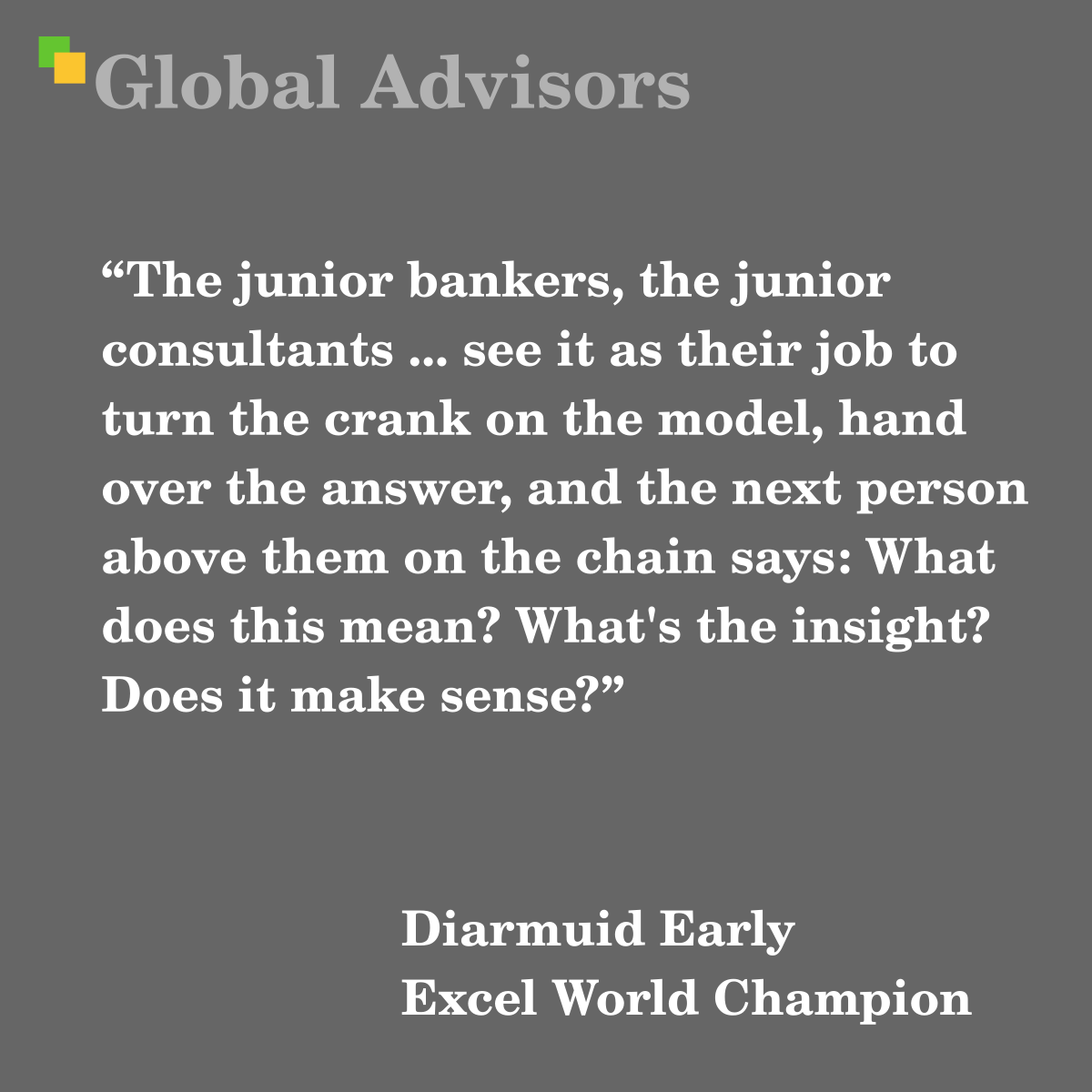
Quote: Diarmuid Early"The junior bankers, the junior consultants ... see it as their job to turn the crank on the model, hand over the answer, and the next person above them on the chain says: What does this mean? What's the insight? Does it make sense?" - Diarmuid Early - Excel World Champion 2025Backstory on Diarmuid EarlyDiarmuid Early, a standout Excel expert from Ireland, clinched the Microsoft Excel World Championship (MEWC) 2025 title by defeating 23 elite competitors in the LAN finals at Las Vegas' HyperX Arena on December 2-3, 2025.7,4,2 His victory capped a grueling season-long tournament organized by Excel Esports, featuring over $60,000 in prizes and drawing top talent from nearly every continent.4,2,1 Early surged through intense stages, including close battles in the semifinals where he trailed leaders like "Haw" by just 10 points (430 vs. 440) before advancing to the final showdown.2 The MEWC 2025 path began with nine "Road to Las Vegas" (RTLV) battles from January to September, qualifying 90 players, followed by regional qualification rounds on September 27 across five continents, sending 150 more to online playoffs from October 11-18 that whittled 256 entrants to 16.1,2 Day 2 in Las Vegas added 64 players via last-chance qualifiers, local chapters, and wildcards, culminating in 24 finalists on Day 3.1,3 Early's prowess shone in high-pressure formats like speed battles with five-minute eliminations and "terrain map" challenges requiring rapid, accurate solutions to 16 complex cases.1,2,3 Beyond esports, Early embodies practical Excel mastery, critiquing how juniors prioritize computation over interpretation—a nod to his real-world finance experience where models must yield actionable insights.7 Context of the QuoteThis quote underscores a core tension in financial modeling and consulting: technical execution versus strategic interpretation. In investment banking and management consulting, juniors often build intricate Excel models—running scenarios, valuations, or forecasts—but seniors demand the "so what?" Early's remark, drawn from his expertise, highlights why Excel champions like him excel: they don't just crank numbers; they extract meaning, sense-check outputs, and drive decisions. Spoken amid the 2025 championship hype, it resonates in an era where AI tools automate "cranking," elevating humans to insight roles. The observation aligns with MEWC's evolution, transforming Excel from office staple to esports discipline testing speed, accuracy, and problem-solving under eliminations and live audiences.6,2,1 Backstory on Leading Theorists in Financial Modeling and InsightsEarly's insight echoes foundational theories in financial modeling, blending quantitative rigor with qualitative judgment. Key figures shaped this field:
These theorists elevated modeling from computation to decision science, training generations (via CFA, FMI certifications) to bridge Early's junior-senior gap. In esports like MEWC, sponsored by CFA Institute and Financial Modeling Institute, competitors embody this by solving "mind-bending tasks" that demand both speed and insight.3,1 Early's championship win positions him as a modern torchbearer, proving elite modelers thrive by asking the right questions post-calculation. References 2. https://www.youtube.com/watch?v=URxoXglEbtk 3. https://www.youtube.com/watch?v=Si2dmLZJpSA 5. https://www.youtube.com/watch?v=VGxxi7Lau50 6. https://www.youtube.com/channel/UCOlnCUAKLENyFC8wftR-oNw 7. https://esportsinsider.com/2025/12/microsoft-excel-world-championship-2025-winner
|
| |
| |
|


| |
| |