| |
|

| |
| |
| |
|
A daily bite-size selection of top business content. |
| |
| |
| |
Quote: Andrej Karpathy"I think 2025-2035 is the decade of agents...... you’ll spin up organizations of Operators for long-running tasks of your choice (eg running a whole company)." - Andrej Karpathy, renowned AI Researcher & Leader The concept of agents, as described by Andrej Karpathy on X on the 23rd January 2025, is a revolutionary idea that has been gaining traction in the field of artificial intelligence (AI). An agent refers to an AI-enabled software system that can perform tasks autonomously, making decisions and taking actions on its own. This technology has the potential to transform various aspects of our lives, from personal assistance to complex organizational management. The Digital World: A Precedent for Agent-Based AutomationKarpathy draws an analogy between digital agents and humanoid robots in the physical world. Just as a humanoid robot can perform tasks autonomously using its sensors and actuators, a digital agent can interact with its environment through interfaces such as keyboards, mice, or even voice commands. This gradual shift towards autonomy will lead to a mixed-world scenario where humans serve as high-level supervisors, monitoring and guiding low-level automation. The Role of OpenAI's OperatorOpenAI's Operator project is a pioneering effort in developing digital agents that can perform complex tasks. By integrating multimodal interfaces (images, video, audio) with large language models (LLMs), Operator has demonstrated the potential for agents to assist humans in various domains, such as ordering food or checking hotel information. Challenges and OpportunitiesHowever, Karpathy emphasizes that significant challenges remain before agents can become a reality. These include:
Despite these challenges, Karpathy believes that the decade of 2025-2035 will be marked by significant advancements in agent technology. He envisions a future where humans can spin up organizations of operators to manage complex tasks, such as running an entire company. This would enable CEOs to focus on high-level strategy and oversight, while agents handle day-to-day operations. Implications and Future DirectionsThe emergence of agents has far-reaching implications for various industries, including:
As Karpathy notes, the market size and opportunity for agent-based automation are substantial, particularly in the physical world. However, the digital world is likely to see faster adoption due to the relative ease of flipping bits compared to moving atoms. In conclusion, the concept of agents has the potential to transform various aspects of our lives, from personal assistance to complex organizational management. While significant challenges remain, Karpathy's vision for a future where humans and agents collaborate to achieve remarkable outcomes is an exciting prospect that warrants continued research and development. |
| |
| |
Quote: T.S. Elliot"This is the way the world ends, not with a bang but a whimper." - From the poem "The Hollow Men" - T.S. Elliot "The Hollow Men" is a poem that explores themes of despair, disillusionment, and the search for meaning in a fragmented world. The poem is divided into five sections and employs a variety of literary allusions, imagery, and symbols. It depicts a sense of emptiness and spiritual barrenness, reflecting the anxieties of the post-World War I era. The "hollow men" are portrayed as individuals who lack substance and purpose, caught in a state of paralysis and unable to act decisively. The quote "This is the way the world ends, not with a bang but a whimper" appears in the final section of the poem and serves as a powerful conclusion to its themes. It suggests that the end of the world—or the end of an era—may not come with dramatic events or cataclysmic violence (the "bang") but rather through a quiet, gradual decline (the "whimper"). This reflects a sense of resignation and futility, emphasizing the idea that the greatest tragedies may occur not through grand gestures but through apathy and inaction. In the context of the poem, this line encapsulates the existential despair of the hollow men, who are unable to find meaning or purpose in their lives. It speaks to the broader human condition, suggesting that the loss of hope and vitality can lead to a silent, unnoticed demise. The imagery evokes a world that has lost its way, where individuals are disconnected from each other and from their own sense of agency. Overall, the quote serves as a poignant reminder of the fragility of existence and the importance of confronting the deeper issues of identity, purpose, and connection in a world that often feels empty and devoid of meaning.
|
| |

| |
Quote: Theodore Roosevelt“The President is merely the most important among a large number of public servants. He should be supported or opposed exactly to the degree which is warranted by his good conduct or bad conduct, his efficiency or inefficiency in rendering loyal, able, and disinterested service to the Nation as a whole. Therefore it is absolutely necessary that there should be full liberty to tell the truth about his acts, and this means that it is exactly necessary to blame him when he does wrong as to praise him when he does right. Any other attitude in an American citizen is both base and servile. To announce that there must be no criticism of the President, or that we are to stand by the President, right or wrong, is not only unpatriotic and servile, but is morally treasonable to the American public. Nothing but the truth should be spoken about him or any one else. But it is even more important to tell the truth, pleasant or unpleasant, about him than about any one else.” - Theodore Roosevelt, US President — May 7, 1918 editorial in the Kansas City Star Theodore Roosevelt, the 26th President of the United States (1901-1909), is known for his progressive policies, vigorous leadership style, and commitment to reform. He championed issues such as trust-busting, conservation, and social justice, and he was a key figure in expanding the role of the federal government in regulating the economy and protecting the environment. The quote from an editorial Roosevelt wrote for the Kansas City Star on May 7, 1918. In this statement, Roosevelt articulates a fundamental principle of democratic governance: the necessity of accountability for public officials, particularly the President. He emphasizes that the President is not above scrutiny; rather, he is "merely the most important among a large number of public servants." This perspective underscores the idea that all public officials, including the highest officeholder, must be held to the same standards of conduct and performance. Roosevelt's assertion that citizens should support or oppose the President based on his "good conduct or bad conduct" reflects his belief in the importance of civic engagement and responsibility. He argues that it is essential for citizens to have the freedom to express their opinions about the President's actions, whether those opinions are critical or supportive. This freedom of expression is a cornerstone of democracy, allowing for open discourse and debate about the actions of government leaders. The phrase "unpatriotic and servile" captures Roosevelt's disdain for blind loyalty to authority figures. He warns against the dangers of a culture that discourages criticism of the President, suggesting that such an attitude undermines the very principles of democracy and accountability. By labeling the refusal to criticize the President as "morally treasonable," Roosevelt emphasizes the ethical obligation of citizens to speak the truth about their leaders, regardless of the political climate.
|
| |
| |
Quote: Rutherford B. Hayes“Nothing brings out the lower traits of human nature like office-seeking. Men of good character and impulses are betrayed by it into all sorts of meanness.” - Rutherford B. Hayes, US President — From the Diary and Letters of Rutherford B. Hayes, August 9, 1878 Rutherford B. Hayes, the 19th President of the United States (1877-1881), is often remembered for his efforts to reform the civil service and his commitment to ending the post-Civil War era of Reconstruction. Before his presidency, Hayes had a distinguished career as a lawyer and a Union general during the Civil War. His administration is noted for its attempts to address corruption in government and to promote integrity in public service. The quote from Hayes's diary on August 9, 1878, reflects his critical perspective on the nature of political ambition and the pursuit of office. In this statement, Hayes suggests that the quest for political power can corrupt individuals, even those with good character and noble intentions. He implies that the competitive and often ruthless nature of office-seeking can lead people to compromise their values and engage in unethical behavior. Hayes's observation speaks to a broader concern about the impact of political culture on human behavior. He recognized that the desire for power can elicit "the lower traits of human nature," such as greed, deceit, and manipulation. This insight is particularly relevant in the context of the Gilded Age, a period marked by significant political corruption, patronage, and the influence of money in politics. By highlighting the potential for moral degradation in the pursuit of office, Hayes advocates for a political culture that prioritizes integrity and ethical conduct. His commitment to civil service reform was a response to the very issues he describes in this quote. He believed that a merit-based system, rather than one based on patronage and favoritism, could help mitigate the corrupting influences of office-seeking.
|
| |
| |
Quote: Abraham Lincoln“Let every American, every lover of liberty, every well wisher to his posterity, swear by the blood of the Revolution, never to violate in the least particular, the laws of the country; and never to tolerate their violation by others.” - Abraham Lincoln. US President — Address before the Young Men’s Lyceum of Springfield — January 27, 1838 Abraham Lincoln, the 16th President of the United States (1861-1865), is renowned for his leadership during the Civil War and his efforts to abolish slavery through the Emancipation Proclamation. Lincoln's speeches and writings often reflect his deep commitment to the principles of democracy, liberty, and the rule of law. The quote comes from Lincoln's address before the Young Men’s Lyceum of Springfield on January 27, 1838. In this speech, Lincoln emphasizes the importance of upholding the laws of the nation as a fundamental duty of every citizen. His call to "swear by the blood of the Revolution" invokes the sacrifices made by the Founding Fathers and the patriots who fought for American independence, underscoring the gravity of the commitment he is asking of his audience. Lincoln's assertion that Americans should never violate the laws of the country, nor tolerate their violation by others, reflects his belief in the necessity of a lawful society. He recognized that the strength of the nation relies on the adherence to laws and the principles of justice. This sentiment is particularly poignant given the context of his time, as the nation was grappling with issues of sectionalism, lawlessness, and the moral crisis surrounding slavery. Moreover, Lincoln's emphasis on the responsibility of citizens to actively uphold the law speaks to the broader theme of civic duty. He believed that the preservation of liberty and democracy required active participation and vigilance from the populace. By urging his audience to take an oath to uphold the law, Lincoln was advocating for a collective commitment to the ideals of justice and order that underpin a free society.
|
| |
| |
Quote: James Polk"Numerous emigrants, of every lineage and language, attracted by the civil and religious freedom we enjoy and by our happy condition, annually crowd to our shores, and transfer their heart, not less than their allegiance, to the country whose dominion belongs alone to the people." - James Polk, US President James K. Polk, the 11th President of the United States (1845-1849), is often remembered for his expansionist policies and significant role in shaping the territorial boundaries of the United States during the mid-19th century. A member of the Democratic Party, Polk was a strong advocate for Manifest Destiny, the belief that the U.S. was destined to expand across the North American continent. The quote reflects Polk's views on immigration and the ideals of American democracy. In this statement, he highlights the appeal of the United States as a land of opportunity, where individuals from diverse backgrounds are drawn to the nation by its promise of civil and religious freedoms. Polk emphasizes that these emigrants not only bring their physical presence but also their loyalty and commitment to the values of the United States. This perspective is significant in the context of the mid-19th century, a time when the U.S. was experiencing a surge in immigration, particularly from Europe. Polk's acknowledgment of the contributions of immigrants underscores the idea that the strength of the nation lies in its diversity and the collective allegiance of its people to democratic principles. Moreover, the phrase "whose dominion belongs alone to the people" reflects the democratic ethos that was central to Polk's vision of America. It suggests that the government derives its power from the consent of the governed, a foundational principle of American democracy. Polk's presidency was marked by significant territorial expansion, including the annexation of Texas and the acquisition of Oregon and California, which further shaped the nation's identity and its role on the global stage. His quote serves as a reminder of the ideals of freedom and opportunity that have historically attracted immigrants to the United States, contributing to its growth and diversity.
|
| |
| |
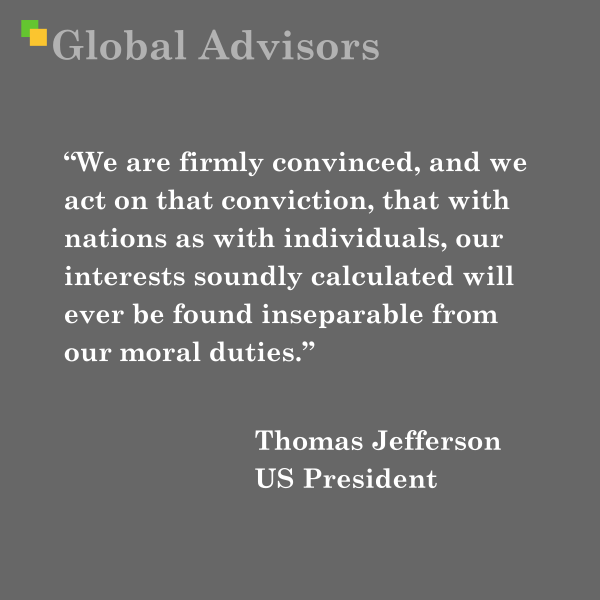
Quote: John Adams"There is danger from all men. The only maxim of a free government ought to be to trust no man living with power to endanger the public liberty." - John Adams John Adams, one of the Founding Fathers of the United States, served as the second President from 1797 to 1801 and was a key figure in the American Revolution. He was a strong advocate for independence and played a crucial role in drafting the Declaration of Independence. Adams was also a prominent lawyer and a leading voice for the principles of republicanism and the rule of law. The quote reflects Adams's deep concern about the potential for tyranny and the abuse of power within a government. Written in his diary in the spring of 1772, this statement underscores his belief that a free government must be vigilant against the concentration of power in the hands of any individual or group. Adams recognized that power can corrupt and that those in authority must be held accountable to prevent the infringement of individual liberties. This sentiment is foundational to the principles of checks and balances that were later enshrined in the U.S. Constitution. Adams's cautionary stance emphasizes the importance of skepticism towards authority and the necessity of safeguarding public liberty against potential threats, whether they arise from government officials or other sources. His insights remain relevant in contemporary discussions about governance, civil liberties, and the balance of power in democratic societies.
|
| |
| |
Quote: Marian Wright Edelman"You can’t be what you can’t see." - Marian Wright Edelman Marian Wright Edelman (born June 30, 1949) is an American lawyer, civil rights activist, and social justice advocate. She has dedicated her life to fighting for the rights of children and families in need, particularly those from marginalized communities. The quote "You can’t be what you can’t see" emphasizes the importance of representation and visibility as powerful tools for inspiring and empowering individuals to pursue their dreams and aspirations. It highlights the idea that seeing people who look like them or come from similar backgrounds achieving success in various fields is crucial for breaking down societal barriers and challenging stereotypes. In other words, this quote underscores the significance of diverse role models and representation in society, as it can help break down barriers and inspire individuals to pursue their own dreams and aspirations.
|
| |

| |
Quote: Dario Amodei"Anthropic is a policy actor, Anthropic is not a political actor." - Dario Amodei This quote by Dario Amodei was made on the 21st January 2025 at Davos. Anthropic, as an entity, focuses primarily on influencing policies rather than engaging in overtly political activities. The context of this statement emphasizes Anthropic's commitment to its role as a policy influencer, ensuring that their actions are not driven by partisan politics but instead guided by the principles and strategies outlined in their policies.
|
| |

| |
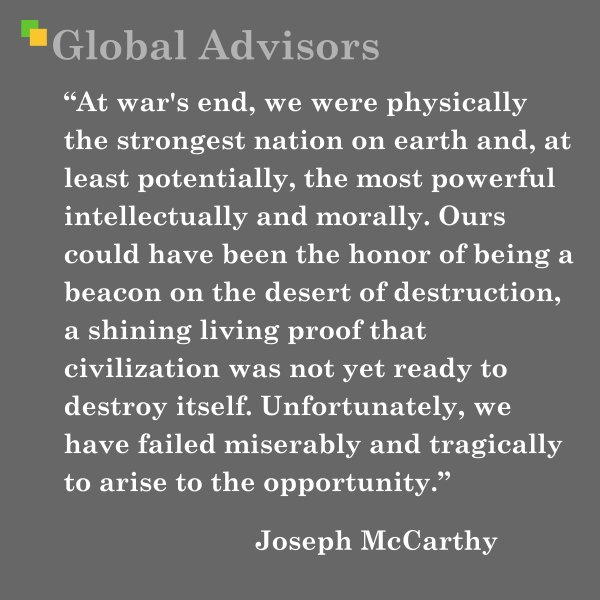
Quote: Joseph McCarthy“At war's end, we were physically the strongest nation on earth and, at least potentially, the most powerful intellectually and morally. Ours could have been the honor of being a beacon on the desert of destruction, a shining living proof that civilization was not yet ready to destroy itself. Unfortunately, we have failed miserably and tragically to arise to the opportunity.” Joseph McCarthy Joseph McCarthy was an American politician and U.S. Senator from Wisconsin, best known for his role in the anti-communist movement during the early Cold War period. Born on November 14, 1908, McCarthy gained national prominence in the early 1950s when he claimed that numerous communists and Soviet spies had infiltrated the U.S. government and other institutions. His most notable period of influence came during the "Red Scare," a time characterized by heightened fears of communist influence in the United States. McCarthy's aggressive tactics included making unsubstantiated accusations against government officials, military personnel, and various public figures, leading to a widespread atmosphere of fear and suspicion. This period, often referred to as "McCarthyism," was marked by intense scrutiny and persecution of individuals based on their political beliefs or associations. McCarthy's methods and lack of evidence eventually led to his downfall. His influence waned after the televised Army-McCarthy hearings in 1954, where his aggressive questioning and bullying tactics were exposed to the public. The Senate formally censured him later that year, and he died on May 2, 1957, from health complications related to alcoholism. McCarthy's legacy is often associated with the dangers of political extremism and the violation of civil liberties in the name of national security.
|
| |
| |
|


| |
| |