| |
|

| |
| |
| |
|
A daily bite-size selection of top business content. |
| |
| |
| |
Quote: Mark Cuban, American businessman“Treat your customers like they own you. Because they do” - Mark Cuban, American businessmanMark Cuban (born 1958) is an American businessman, investor, and philanthropist. He is best known for being the owner of the NBA's Dallas Mavericks and the co-owner of 2929 Entertainment. Cuban has also been a prominent figure in the tech industry, founding or investing in several successful companies, including Broadcast.com, which he sold to Yahoo! for $5.7 billion. Early Life and CareerCuban was born in Pittsburgh, Pennsylvania, and grew up in a working-class family. He dropped out of college at age 19 and moved to Texas, where he began his business career. Cuban's entrepreneurial spirit led him to found several successful companies, including MicroSolutions, which he sold for $60 million. Philosophy on LeadershipCuban is known for his forward-thinking approach to leadership and business. He believes that leaders should focus on the future and creating positive change rather than dwelling on past mistakes or failures. His quote emphasizes the importance of innovation, adaptability, and a growth mindset in achieving success. Key Teachings
Impact and LegacyCuban's entrepreneurial success and outspoken nature have made him a well-known figure in business circles. He has been featured in numerous books and documentaries, sharing his insights on leadership, investing, and entrepreneurship. His quote about leaders looking forward to create a better future reflects his belief in the power of innovation and positive change. Motivational StyleCuban's style is characterized by his emphasis on transparency, honesty, and continuous learning. He often uses personal anecdotes and practical examples to illustrate his points, making complex ideas accessible and engaging. His ability to connect with audiences on a personal level has made him an influential figure in the world of business and entrepreneurship. Influence on Modern ThoughtCuban's teachings have influenced many modern thinkers and entrepreneurs
|
| |

| |
Quote: Mark Cuban, American businessman“Work like there is someone working 24 hours a day to take it all away from you.” - Mark Cuban, American businessmanMark Cuban (born 1958) is an American businessman, investor, and philanthropist. He is best known for being the owner of the NBA's Dallas Mavericks and the co-owner of 2929 Entertainment. Cuban has also been a prominent figure in the tech industry, founding or investing in several successful companies, including Broadcast.com, which he sold to Yahoo! for $5.7 billion. Early Life and CareerCuban was born in Pittsburgh, Pennsylvania, and grew up in a working-class family. He dropped out of college at age 19 and moved to Texas, where he began his business career. Cuban's entrepreneurial spirit led him to found several successful companies, including MicroSolutions, which he sold for $60 million. Philosophy on LeadershipCuban is known for his forward-thinking approach to leadership and business. He believes that leaders should focus on the future and creating positive change rather than dwelling on past mistakes or failures. His quote emphasizes the importance of innovation, adaptability, and a growth mindset in achieving success. Key Teachings
Impact and LegacyCuban's entrepreneurial success and outspoken nature have made him a well-known figure in business circles. He has been featured in numerous books and documentaries, sharing his insights on leadership, investing, and entrepreneurship. His quote about leaders looking forward to create a better future reflects his belief in the power of innovation and positive change. Motivational StyleCuban's style is characterized by his emphasis on transparency, honesty, and continuous learning. He often uses personal anecdotes and practical examples to illustrate his points, making complex ideas accessible and engaging. His ability to connect with audiences on a personal level has made him an influential figure in the world of business and entrepreneurship. Influence on Modern ThoughtCuban's teachings have influenced many modern thinkers and entrepreneurs
|
| |

| |
Quote: Mark Cuban, American businessman“Work like there is someone working 24 hours a day to take it all away from you.” - Mark Cuban, American businessmanMark Cuban (born 1958) is an American businessman, investor, and philanthropist. He is best known for being the owner of the NBA's Dallas Mavericks and the co-owner of 2929 Entertainment. Cuban has also been a prominent figure in the tech industry, founding or investing in several successful companies, including Broadcast.com, which he sold to Yahoo! for $5.7 billion. Early Life and CareerCuban was born in Pittsburgh, Pennsylvania, and grew up in a working-class family. He dropped out of college at age 19 and moved to Texas, where he began his business career. Cuban's entrepreneurial spirit led him to found several successful companies, including MicroSolutions, which he sold for $60 million. Philosophy on LeadershipCuban is known for his forward-thinking approach to leadership and business. He believes that leaders should focus on the future and creating positive change rather than dwelling on past mistakes or failures. His quote emphasizes the importance of innovation, adaptability, and a growth mindset in achieving success. Key Teachings
Impact and LegacyCuban's entrepreneurial success and outspoken nature have made him a well-known figure in business circles. He has been featured in numerous books and documentaries, sharing his insights on leadership, investing, and entrepreneurship. His quote about leaders looking forward to create a better future reflects his belief in the power of innovation and positive change. Motivational StyleCuban's style is characterized by his emphasis on transparency, honesty, and continuous learning. He often uses personal anecdotes and practical examples to illustrate his points, making complex ideas accessible and engaging. His ability to connect with audiences on a personal level has made him an influential figure in the world of business and entrepreneurship. Influence on Modern ThoughtCuban's teachings have influenced many modern thinkers and entrepreneurs
|
| |
| |
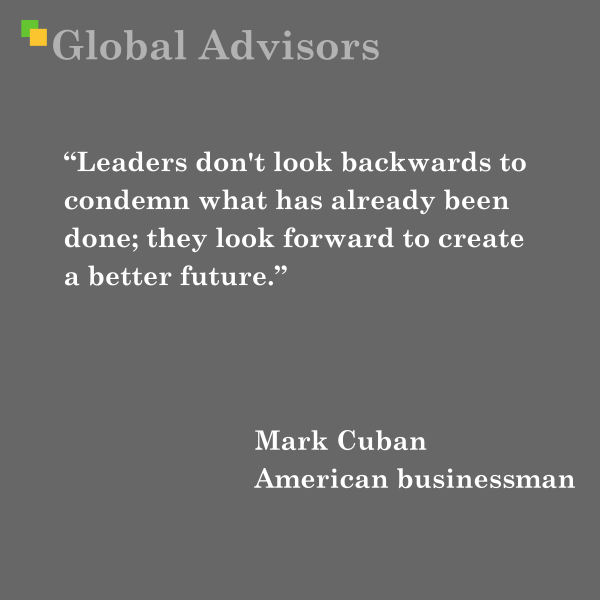
Quote: Mark Cuban, American businessman“Leaders don't look backwards to condemn what has already been done; they look forward to create a better future.” - Mark Cuban, American businessmanMark Cuban (born 1958) is an American businessman, investor, and philanthropist. He is best known for being the owner of the NBA's Dallas Mavericks and the co-owner of 2929 Entertainment. Cuban has also been a prominent figure in the tech industry, founding or investing in several successful companies, including Broadcast.com, which he sold to Yahoo! for $5.7 billion. Early Life and CareerCuban was born in Pittsburgh, Pennsylvania, and grew up in a working-class family. He dropped out of college at age 19 and moved to Texas, where he began his business career. Cuban's entrepreneurial spirit led him to found several successful companies, including MicroSolutions, which he sold for $60 million. Philosophy on LeadershipCuban is known for his forward-thinking approach to leadership and business. He believes that leaders should focus on the future and creating positive change rather than dwelling on past mistakes or failures. His quote emphasizes the importance of innovation, adaptability, and a growth mindset in achieving success. Key Teachings
Impact and LegacyCuban's entrepreneurial success and outspoken nature have made him a well-known figure in business circles. He has been featured in numerous books and documentaries, sharing his insights on leadership, investing, and entrepreneurship. His quote about leaders looking forward to create a better future reflects his belief in the power of innovation and positive change. Motivational StyleCuban's style is characterized by his emphasis on transparency, honesty, and continuous learning. He often uses personal anecdotes and practical examples to illustrate his points, making complex ideas accessible and engaging. His ability to connect with audiences on a personal level has made him an influential figure in the world of business and entrepreneurship. Influence on Modern ThoughtCuban's teachings have influenced many modern thinkers and entrepreneurs
|
| |

| |
Quote: Mark Cuban, American businessman“Leaders don't look backwards to condemn what has already been done; they look forward to create a better future.” - Mark Cuban, American businessmanMark Cuban (born 1958) is an American businessman, investor, and philanthropist. He is best known for being the owner of the NBA's Dallas Mavericks and the co-owner of 2929 Entertainment. Cuban has also been a prominent figure in the tech industry, founding or investing in several successful companies, including Broadcast.com, which he sold to Yahoo! for $5.7 billion. Early Life and CareerCuban was born in Pittsburgh, Pennsylvania, and grew up in a working-class family. He dropped out of college at age 19 and moved to Texas, where he began his business career. Cuban's entrepreneurial spirit led him to found several successful companies, including MicroSolutions, which he sold for $60 million. Philosophy on LeadershipCuban is known for his forward-thinking approach to leadership and business. He believes that leaders should focus on the future and creating positive change rather than dwelling on past mistakes or failures. His quote emphasizes the importance of innovation, adaptability, and a growth mindset in achieving success. Key Teachings
Impact and LegacyCuban's entrepreneurial success and outspoken nature have made him a well-known figure in business circles. He has been featured in numerous books and documentaries, sharing his insights on leadership, investing, and entrepreneurship. His quote about leaders looking forward to create a better future reflects his belief in the power of innovation and positive change. Motivational StyleCuban's style is characterized by his emphasis on transparency, honesty, and continuous learning. He often uses personal anecdotes and practical examples to illustrate his points, making complex ideas accessible and engaging. His ability to connect with audiences on a personal level has made him an influential figure in the world of business and entrepreneurship. Influence on Modern ThoughtCuban's teachings have influenced many modern thinkers and entrepreneurs
|
| |
| |
Quote: Ray Dalio, Founder of Bridgewater Associates“Choose your habits well. Habit is probably the most powerful tool in your brain’s toolbox.” - Ray Dalio, Founder of Bridgewater AssociatesRaymond Dalio (born 1954) is an American businessman, investor, and philanthropist. He is the founder of Bridgewater Associates, one of the world's largest hedge fund firms, with over $100 billion in assets under management. Early Life and CareerDalio grew up in New Jersey and faced significant challenges early in life, including a difficult family situation and academic struggles. Despite these obstacles, he developed a strong interest in economics and finance. After working as an economist for the government, he co-founded Bridgewater Associates in 1981 with $20 million in seed capital from his own savings. Philosophy on SuccessDalio's philosophy emphasizes the importance of continuous learning, adaptability, and resilience. He believes that success comes from a deep understanding of oneself and one's environment, coupled with the willingness to take risks and learn from failures. His quote highlights the idea that growth and potential are maximized when one is willing to push beyond their current limits and embrace failure as a necessary part of the learning process. Key Teachings
Impact and LegacyDalio's approach to investing and leadership has had a significant impact on the financial industry. He is known for his innovative investment strategies and his focus on risk management. His book, "Principles: Life and Work," which outlines his principles for success, has become a bestseller and is widely read by professionals in various fields. Motivational StyleDalio's style is characterized by his emphasis on transparency, honesty, and continuous learning. He often uses personal anecdotes and practical examples to illustrate his points, making complex ideas accessible and engaging. His ability to connect with audiences on a personal level has made him a highly influential figure in the world of business and personal development. Influence on Modern ThoughtDalio's teachings have influenced many modern thinkers and leaders, particularly in the fields of finance and leadership. His focus on transparency, adaptability, and continuous learning remains relevant in today’s rapidly changing business environment. Many of his ideas have been referenced and built upon by contemporary authors, speakers, and business leaders. Personal LifeDalio is married to Jane Bruning, and they have three children. He is known for his philanthropic efforts, particularly in the areas of education and economic development. He has founded the Ray and Jane Dalio Foundation, which supports initiatives aimed at improving social mobility and economic opportunity.
|
| |

| |
Quote: Winston Churchill, Prime Minister of the United Kingdom“You ask what is our aim? I can answer in one word: Victory. Victory at all costs. Victory in spite of all terror. Victory however long and hard the road may be. For without victory there is no survival.” - Winston Churchill, Prime Minister of the United KingdomSir Winston Leonard Spencer-Churchill (1874–1965) was a British politician, military leader, and writer who served as the Prime Minister of the United Kingdom from 1940 to 1945 and again from 1951 to 1955. He is widely regarded as one of the greatest wartime leaders in history. Early Life and Political CareerChurchill was born into an aristocratic family and initially pursued a military career, serving in various campaigns around the world. He entered politics in 1900 and became a member of Parliament. Over his long political career, he held several high-profile positions, including First Lord of the Admiralty and Chancellor of the Exchequer. The Second World WarChurchill's leadership during World War II is perhaps his most celebrated achievement. When Germany invaded Poland in 1939, Churchill was appointed Prime Minister after the resignation of Neville Chamberlain. He quickly became a key figure in the war effort, known for his strong leadership and unwavering commitment to the Allied cause. The First Speech as Prime MinisterOn May 13, 1940, shortly after becoming Prime Minister, Churchill delivered his first speech to the House of Commons. In this speech, he set the tone for Britain's resistance against Nazi Germany and outlined his vision for the war effort. His famous words, "I would say to the House, as I said to those who have joined this Government, I have nothing to offer but blood, toil, tears, and sweat," captured the resolve and sacrifice required to defeat the Axis powers. The Full Quote"I would say to the House, as I said to those who have joined this Government, I have nothing to offer but blood, toil, tears, and sweat. We have before us an ordeal of the most grievous kind. We have before us many long months of toil and struggle. You ask what is our aim? I can answer in one word: Victory. Victory at all costs. Victory in spite of all terror. Victory however long and hard the road may be. For without victory there is no survival." Impact and LegacyChurchill's speech and his subsequent leadership during World War II had a profound impact on British morale and international confidence in the Allies. His commitment to victory at all costs inspired soldiers, civilians, and leaders alike to endure the hardships of war. Churchill’s speeches and writings continue to be studied for their historical significance and as examples of powerful oratory. Influence on Modern ThoughtChurchill's quote has become a timeless expression of determination and resilience in the face of adversity. It is often referenced in contexts where unwavering commitment and sacrifice are required. His leadership during World War II remains a benchmark for strong and principled governance, demonstrating that victory can be achieved through perseverance and a clear vision.
|
| |

| |
Quote: Ray Dalio, Founder of Bridgewater Associates“If you’re not failing, you’re not pushing your limits, and if you’re not pushing your limits, you’re not maximizing your potential.” - Ray Dalio, Founder of Bridgewater AssociatesRaymond Dalio (born 1954) is an American businessman, investor, and philanthropist. He is the founder of Bridgewater Associates, one of the world's largest hedge fund firms, with over $100 billion in assets under management. Early Life and CareerDalio grew up in New Jersey and faced significant challenges early in life, including a difficult family situation and academic struggles. Despite these obstacles, he developed a strong interest in economics and finance. After working as an economist for the government, he co-founded Bridgewater Associates in 1981 with $20 million in seed capital from his own savings. Philosophy on SuccessDalio's philosophy emphasizes the importance of continuous learning, adaptability, and resilience. He believes that success comes from a deep understanding of oneself and one's environment, coupled with the willingness to take risks and learn from failures. His quote highlights the idea that growth and potential are maximized when one is willing to push beyond their current limits and embrace failure as a necessary part of the learning process. Key Teachings
Impact and LegacyDalio's approach to investing and leadership has had a significant impact on the financial industry. He is known for his innovative investment strategies and his focus on risk management. His book, "Principles: Life and Work," which outlines his principles for success, has become a bestseller and is widely read by professionals in various fields. Motivational StyleDalio's style is characterized by his emphasis on transparency, honesty, and continuous learning. He often uses personal anecdotes and practical examples to illustrate his points, making complex ideas accessible and engaging. His ability to connect with audiences on a personal level has made him a highly influential figure in the world of business and personal development. Influence on Modern ThoughtDalio's teachings have influenced many modern thinkers and leaders, particularly in the fields of finance and leadership. His focus on transparency, adaptability, and continuous learning remains relevant in today’s rapidly changing business environment. Many of his ideas have been referenced and built upon by contemporary authors, speakers, and business leaders. Personal LifeDalio is married to Jane Bruning, and they have three children. He is known for his philanthropic efforts, particularly in the areas of education and economic development. He has founded the Ray and Jane Dalio Foundation, which supports initiatives aimed at improving social mobility and economic opportunity.
|
| |

| |
Quote: Eliot Cohen, Former US Under Secretary of Defense“It is really important to use clear language about this, and call evil evil.” – Eliot Cohen, Former US Under Secretary of DefenseFrom "EMERGENCY EPISODE: Oval Office Ambush | Shield of the Republic - Eric Edelman and Eliot Cohen - 2nd March 2025 Eliot Cohen, an American political scientist, emphasizes the importance of clear language when discussing issues of morality and ethics. In the context of the Oval Office meeting between President Trump, Vice President Vance, and President Zelensky, Cohen's quote highlights a critical aspect of leadership and statecraft. Background on Eliot CohenEliot Cohen is a renowned scholar and former Pentagon official who has written extensively on international relations, strategic policy, and national security. He served as the Under Secretary of Defense for Policy under President George W. Bush from 2001 to 2005. The Importance of Clear LanguageCohen's statement underscores the idea that when discussing matters of morality and ethics, it is crucial to use clear language to convey one's stance. He criticizes those who downplay or excuse the behavior of President Trump and Vice President Vance by suggesting that they were simply engaging in a strategic negotiation. Cohen argues that such excuses are not only wrong but also align with Russian interests, as they undermine the credibility of Ukraine's efforts to defend itself against aggression. Moral Clarity and StatecraftCohen's emphasis on clear language is particularly relevant during times of crisis and political tension. By calling out evil explicitly, he advocates for a more straightforward and honest approach to statecraft. This clarity helps in maintaining moral integrity and ensures that actions are not misinterpreted or justified by those with malicious intentions. Impact and InfluenceEliot Cohen's views on clear language have resonated with many scholars and policymakers who believe in the importance of ethical leadership. His emphasis on moral clarity has contributed to discussions on how leaders should communicate their decisions, especially during challenging international situations.
|
| |

| |
Quote: Jim Rohn, American entrepreneur, author, and motivational speaker“Either you run the day, or the day runs you.” – Jim RohnBiographyJames Murray Rohn (1932–1998) was an American entrepreneur, author, and motivational speaker who became one of the most influential figures in personal development during his lifetime. He is known for his insightful and often humorous teachings on success, wealth, and personal growth. Early Life and CareerRohn grew up in a small town in Indiana and faced significant challenges early in life, including poverty and an abusive father. Despite these obstacles, he worked hard to build a successful career as a sales trainer and motivational speaker. He founded Rohn Management Company, which provided training and consulting services for businesses. Philosophy on SuccessRohn's philosophy emphasized the importance of personal responsibility and continuous learning. He believed that success is not achieved by luck or chance but by deliberate action and consistent effort. His teachings focused on helping individuals take control of their lives and make positive changes. Key Teachings
Impact and LegacyRohn's teachings have had a profound impact on millions of people around the world. His books, such as "The Art of Exceptional Living" and "The Four Percent Principle," continue to be popular and influential in personal development circles. He is often compared to other motivational figures like Napoleon Hill and Zig Ziglar for his contributions to the field of self-help and motivation. Motivational StyleRohn's style was known for its practicality, humor, and deep understanding of human nature. He used stories and anecdotes to illustrate his points, making complex ideas accessible and engaging. His ability to connect with audiences on a personal level has made him one of the most revered figures in motivational speaking. Influence on Modern ThoughtRohn's teachings continue to inspire and influence modern thinkers and leaders. His emphasis on personal responsibility and continuous learning remains relevant in today’s fast-paced and competitive world. Many of his ideas have been referenced and built upon by contemporary authors, speakers, and business leaders. Personal LifeRohn was married to Kathleen Rohn, and they had three children. He passed away in 1998 at the age of 65, leaving behind a rich legacy of wisdom and inspiration that continues to resonate with people worldwide.
|
| |

| |
|


| |
| |