| |
|
Our selection of the top business news sources on the web.
AM edition. Issue number 1004
Latest 10 stories. Click the button for more.
|
| |
|
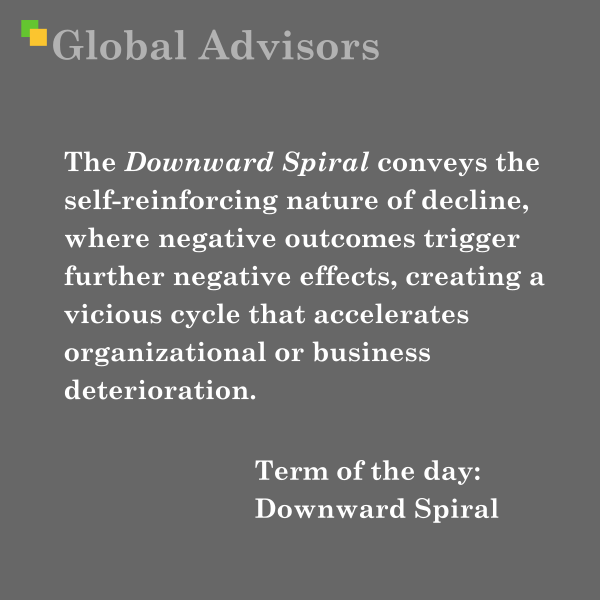
The "Downward Spiral" conveys the self-reinforcing nature of decline, where negative outcomes trigger further negative effects, creating a vicious cycle that accelerates organizational or business deterioration.
Description in Strategy Context:
A downward spiral (or death spiral) is a self-perpetuating cycle in which a series of negative events and poor decisions reinforce each other, leading a business or organization into deeper trouble with each iteration. Here’s how it typically unfolds:
- Initial setback: An organization experiences a blow—such as declining sales, rising costs, or the loss of key talent.
- Reactive cuts: In response, leadership may cut costs, reduce investment, or scale back innovation, hoping to stabilize the business.
- Worsening performance: These moves often reduce morale, product quality, or customer satisfaction, causing results to worsen even further.
- Accelerated decline: Negative outcomes compound: as performance drops, more resources are withdrawn, leading to further decline in capability and competitiveness.
- Vicious feedback loop: Each round of negative results triggers even more severe responses, until the business can no longer recover—a classic vicious cycle.
The death spiral is not only a business phenomenon; it also appears in organizational health, team dynamics, and even sectors facing structural disruption. Examples include companies that fail to adapt to market changes, cut back on innovation, or repeatedly lose top talent—each bad outcome sets up the next.
Systems thinking frames this as a “cycle of disinvestment or deterioration,” where short-term fixes and narrow thinking deplete the core strengths of the organization, making it ever harder to recover.
Related Strategic Thinker: Peter Senge
Senge, through his influential book The Fifth Discipline, pioneered the use of systems thinking in organizations, identifying and describing “reinforcing feedback loops”—the underlying structure of both virtuous and vicious (downward) cycles. He showed how, left unchecked, these loops could create powerful forces driving either sustained growth or relentless decline.

|
| |
| |
|
A virtuous cycle is a self-reinforcing loop in which a series of positive actions and outcomes continually strengthen each other, leading to sustained growth and improvement over time. In business, this means one beneficial event—such as improved performance or cost savings—leads to additional positive effects, such as increased customer acquisition or higher profits. The momentum generated by these reinforcing outcomes creates an upward spiral where each gain fuels the next, resulting in exponential growth and long-term success.
A classic example is Amazon’s business model: lower operating costs enable reduced prices, which attract more customers. Increased sales generate higher profits, which can then be reinvested in further efficiencies—perpetuating the cycle. Similarly, when a company reinvests profits from top-line growth into innovation or market expansion, it triggers a renewed cycle of revenue increases and competitive advantage.
Key characteristics of a virtuous cycle:
- Positive feedback loop where each success amplifies future successes
- Sustainable and exponential business growth
- Contrasts with a "vicious cycle", where negative outcomes reinforce decline
The best-related strategy theorist for the virtuous cycle is Jim Collins. His influential work, particularly in the book Good to Great, describes how companies create "flywheels"—a metaphor for virtuous cycles—where small, consistent efforts build momentum and translate into extraordinary, sustained results. Collins’ articulation of the flywheel effect precisely captures the mechanics of building and maintaining a virtuous cycle within organizations.

|
| |

| |
|
AI inference refers to the process in which a trained artificial intelligence (AI) or machine learning model analyzes new, unseen data to make predictions or decisions. After a model undergoes training—learning patterns, relationships, or rules from labeled datasets—it enters the inference phase, where it applies that learned knowledge to real-world situations or fresh inputs.
This process typically involves the following steps:
- Training phase: The model is exposed to large, labeled datasets (for example, images with known categories), learning to recognize key patterns and features.
- Inference phase: The trained model receives new data (such as an unlabeled image) and applies its knowledge to generate a prediction or decision (like identifying objects within the image).
AI inference is fundamental because it operationalizes AI, enabling it to be embedded into real-time applications such as voice assistants, autonomous vehicles, medical diagnosis tools, and fraud detection systems. Unlike the resource-intensive training phase, inference is generally optimized for speed and efficiency—especially important for tasks on edge devices or in situations requiring immediate results.
As generative and agent-based AI applications mature, the demand for faster and more scalable inference is rapidly increasing, driving innovation in both software and hardware to support these real-time or high-volume use cases.
A major shift in AI inference is occurring as new elements—such as test time compute (TTC), chain-of-thought reasoning, and adaptive inference—reshape how and where computational resources are allocated in AI systems.
Expanded Elements in AI Inference
-
Test-Time Compute (TTC): This refers to the computational effort expended during inference rather than during initial model training. Traditionally, inference consisted of a single, fast forward pass through the model, regardless of the complexity of the question. Recent advances, particularly in generative AI and large language models, involve dynamically increasing compute at inference time for more challenging problems. This allows the model to “think harder” by performing additional passes, iterative refinement, or evaluating multiple candidate responses before selecting the best answer
-
Chain-of-Thought Reasoning: Modern inference can include step-by-step reasoning, where models break complex problems into sub-tasks and generate intermediate steps before arriving at a final answer. This process may require significantly more computation during inference, as the model deliberates and evaluates alternative solutions—mimicking human-like problem solving rather than instant pattern recognition.
-
Adaptive Compute Allocation: With TTC, AI systems can allocate more resources dynamically based on the difficulty or novelty of the input. Simple questions might still get an immediate, low-latency response, while complex or ambiguous tasks prompt the model to use additional compute cycles for deeper reasoning and improved accuracy.
Impact: Shift in Compute from Training to Inference
-
From Heavy Training to Intelligent Inference: The traditional paradigm put most of the computational burden and cost on the training phase, after which inference was light and static. With TTC and chain-of-thought reasoning, more computation shifts into the inference phase. This makes inference more powerful and flexible, allowing for real-time adaptation and better performance on complex, real-world tasks without the need for ever-larger model sizes.
-
Strategic and Operational Implications: This shift enables organizations to optimize resources by focusing on smarter, context-aware inference rather than continually scaling up training infrastructure. It also allows for more responsive AI systems that can improve decision-making and user experiences in dynamic environments.
-
Industry Adoption: Modern models from leading labs (such as OpenAI and Google’s Gemini) now support iterative, compute-intensified inference modes, yielding substantial gains on benchmarks and real-world applications, especially where deep reasoning or nuanced analysis is required.
These advancements in test time compute and reasoned inference mark a pivotal transformation in AI, moving from static, single-pass prediction to dynamic, adaptive, and resource-efficient problem-solving at the moment of inference.
Related strategy theorist: Yann LeCun
Yann LeCun is widely recognized as a pioneering theorist in neural networks and deep learning—the foundational technologies underlying modern AI inference. His contributions to convolutional neural networks and strategies for scalable, robust AI learning have shaped the current landscape of AI deployment and inference capabilities.
“AI inference is the core mechanism by which machine learning models transform training into actionable intelligence, supporting everything from real-time analysis to agent-based automation.”
Yann LeCun is a French-American computer scientist and a foundational figure in artificial intelligence, especially in the areas of deep learning, computer vision, and neural networks. Born on July 8, 1960, in Soisy-sous-Montmorency, France, he received his Diplôme d'Ingénieur from ESIEE Paris in 1983 and earned his PhD in Computer Science from Sorbonne University (then Université Pierre et Marie Curie) in 1987. His doctoral research introduced early methods for back-propagation in neural networks, foreshadowing the architectures that would later revolutionize AI.
LeCun began his research career at the Centre National de la Recherche Scientifique (CNRS) in France, focusing on computer vision and image recognition. His expertise led him to postdoctoral work at the University of Toronto, where he collaborated with other leading minds in neural networks. In 1988, he joined AT&T Bell Laboratories in New Jersey, eventually becoming head of the Image Processing Research Department. There, LeCun led the development of convolutional neural networks (CNNs), which became the backbone for modern image and speech recognition systems. His technology for handwriting and character recognition was widely adopted in banking, reading a significant share of checks in the U.S. in the early 2000s.
LeCun also contributed to the creation of DjVu, a high-efficiency image compression technology, and the Lush programming language. In 2003, he became a professor at New York University (NYU), where he founded the NYU Center for Data Science, advancing interdisciplinary AI research.
In 2013, LeCun became Director of AI Research at Facebook (now Meta), where he leads the Facebook AI Research (FAIR) division, focusing on both theoretical and applied AI at scale. His leadership at Meta has pushed forward advancements in self-supervised learning, agent-based systems, and the practical deployment of deep learning technologies.
LeCun, along with Yoshua Bengio and Geoffrey Hinton, received the 2018 Turing Award—the highest honor in computer science—for his pioneering work in deep learning. The trio is often referred to as the "Godfathers of AI" for their collective influence on the field.
Yann LeCun’s Thinking and Approach
LeCun’s intellectual focus is on building intelligent systems that can learn from data efficiently and with minimal human supervision. He strongly advocates for self-supervised and unsupervised learning as the future of AI, arguing that these approaches best mimic how humans and animals learn. He believes that for AI to reach higher forms of reasoning and perception, systems must be able to learn from raw, unlabeled data and develop internal models of the world.
LeCun is also known for his practical orientation—developing architectures (like CNNs) that move beyond theory to solve real-world problems efficiently. His thinking consistently emphasizes the importance of scaling AI not just through bigger models, but through more robust, data-efficient, and energy-efficient algorithms.
He has expressed skepticism about narrow, brittle AI systems that rely heavily on supervised learning and excessive human labeling. Instead, he envisions a future where AI agents can learn, reason, and plan with broader autonomy, similar to biological intelligence. This vision guides his research and strategic leadership in both academia and industry.
LeCun remains a prolific scientist, educator, and spokesperson for responsible and open AI research, championing collaboration and the broad dissemination of AI knowledge.

|
| |
| |
|
AI Agents are autonomous software systems that interact with their environment, perceive data, and independently make decisions and take actions to achieve specific, user-defined goals. Unlike traditional software, which follows static, explicit instructions, AI agents are guided by objective functions and have the ability to reason, learn, plan, adapt, and optimize responses based on real-time feedback and changing circumstances.
Key characteristics of AI agents include:
- Autonomy: They can initiate and execute actions without constant human direction, adapting as new data or situations arise.
- Rational decision-making: AI agents use data and perceptions of their environment to select actions that maximize predefined goals or rewards (their “objective function”), much like rational agents in economics.
- Learning and Adaptation: Through techniques like machine learning, agents improve their performance over time by learning from experience.
- Multimodal abilities: Advanced agents process various types of input/output—text, audio, video, code, and more—and often collaborate with humans or other agents to complete complex workflows or transactions.
- Versatility: They range from simple (like thermostats) to highly complex systems (like conversational AI assistants or autonomous vehicles).
Examples include virtual assistants that manage calendars or customer support, code-review bots in software development, self-driving cars navigating traffic, and collaborative agents that orchestrate business processes.
Related Strategy Theorist - Stuart Russell
As a renowned AI researcher and co-author of the seminal textbook "Artificial Intelligence: A Modern Approach," Russell has shaped foundational thinking on agent-based systems and rational decision-making. He has also been at the forefront of advocating for the alignment of agent objectives with human values, providing strategic frameworks for deploying autonomous agents safely and effectively across industries.

|
| |
| |
|
Artificial General Intelligence (AGI) is defined as a form of artificial intelligence that can understand, learn, and apply knowledge across the full spectrum of human cognitive tasks—matching or even exceeding human capabilities in any intellectual endeavor. Unlike current artificial intelligence systems, which are typically specialized (known as narrow AI) and excel only in specific domains such as language translation or image recognition, AGI would possess the versatility and adaptability of the human mind.
AGI enables machines to perform essentially all human cognitive tasks at or above top human expert level, acquire new skills, and transfer its capabilities to entirely new domains, embodying a level of intelligence no single human possesses—rather, it would represent the combined expertise of top minds across all fields.
Alternative Name – Superintelligence: The term superintelligence or Artificial Superintelligence (ASI) refers to an intelligence that not only matches but vastly surpasses human abilities in virtually every aspect. While AGI is about equaling human-level intelligence, superintelligence describes systems that can independently solve problems, create knowledge, and innovate far beyond even the best collective human intellect.
Key contrasts between AGI and (narrow) AI:
- Scope: AGI can generalize across different tasks and domains; narrow AI is limited to narrowly defined problems.
- Learning and Adaptation: AGI learns and adapts to new situations much as humans do, while narrow AI cannot easily transfer skills to new, unfamiliar domains.
- Cognitive Sophistication: AGI mimics the full range of human intelligence; narrow AI does not.
Strategy Theorist — Ilya Sutskever: Ilya Sutskever is a leading figure in the pursuit of AGI, known for his foundational contributions to deep learning and as a co-founder of OpenAI. Sutskever’s work focuses on developing models that move beyond narrow applications toward truly general intelligence, shaping both the technical roadmap and ethical debate around AGI’s future.
Ilya Sutskever’s views on the impact of superintelligence are characterized by a blend of optimism for its transformative potential and deep caution regarding its unpredictability and risks. Sutskever believes superintelligence could revolutionize industries, particularly healthcare, and deliver unprecedented economic, social, and scientific breakthroughs within the next decade. He foresees AI as a force that can solve complex problems and dramatically extend human capabilities. For business, this implies radical shifts: automating sophisticated tasks, generating new industries, and redefining competitive advantages as organizations adapt to a new intelligence landscape.
However, Sutskever consistently stresses that the rise of superintelligent AI is “extremely unpredictable and unimaginable,” warning that its self-improving nature could quickly move beyond human comprehension and control. He argues that while the rewards are immense, the risks—including loss of human oversight and the potential for misuse or harm—demand proactive, ethical, and strategic guidance. Sutskever champions the need for holistic thinking and interdisciplinary engagement, urging leaders and society to prepare for AI’s integration not with fear, but with ethical foresight, adaptation, and resilience.
He has prioritized AI safety and “superalignment” as central to his strategies, both at OpenAI and through his new Safe Superintelligence venture, actively seeking mechanisms to ensure that the economic and societal gains from superintelligence do not come at unacceptable risks. Sutskever’s message for corporate leaders and policymakers is to engage deeply with AI’s trajectory, innovate responsibly, and remain vigilant about both its promise and its perils.
In summary, AGI is the milestone where machines achieve general, human-equivalent intelligence, while superintelligence describes a level of machine intelligence that greatly surpasses human performance. The pursuit of AGI, championed by theorists like Ilya Sutskever, represents a profound shift in both the potential and challenges of AI in society.

|
| |
| |
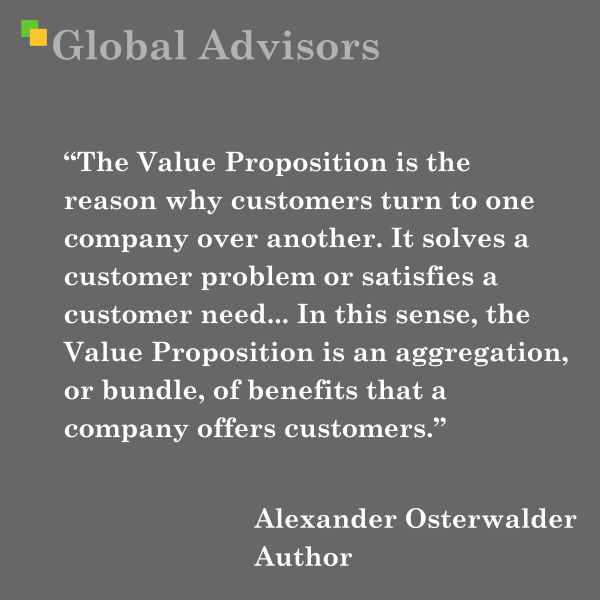
“The Value Proposition is the reason why customers turn to one company over another. It solves a customer problem or satisfies a customer need. Each Value Proposition consists of a selected bundle of products and/or services that caters to the requirements of a specific Customer Segment. In this sense, the Value Proposition is an aggregation, or bundle, of benefits that a company offers customers.” - Alexander Osterwalder, Business Model Generation: A Handbook for Visionaries, Game Changers, and Challengers
Alexander Osterwalder is recognized as one of the most influential voices in modern business strategy and innovation. Born in Switzerland in 1974, Osterwalder began his academic journey with an MA in Political Science from the University of Lausanne and went on to earn a PhD in Management Information Systems. His doctoral thesis, “The Business Model Ontology,” laid the groundwork for what would become his most celebrated contribution: the Business Model Canvas—a visual framework now used worldwide to clarify, communicate, and innovate business models.
Osterwalder’s thinking centers on providing systematic, accessible tools for organizations to navigate increasingly complex markets. With the Business Model Canvas, co-created with Professor Yves Pigneur, Osterwalder offered a practical, visual language to identify key elements of any business—including the crucial “Value Proposition.” This component addresses the heart of why customers choose one company over another by aggregating products and services to solve specific customer problems or fulfill unique needs.
The quote featured in “Business Model Generation: A Handbook for Visionaries, Game Changers, and Challengers” encapsulates Osterwalder’s belief that a company’s success is rooted not just in what it sells, but in its ability to deliver real, distinctive value to a specific customer segment. This insight was formed through years of collaboration with hundreds of practitioners and scholars, resulting in a global bestseller that has shaped how industries—from startups to Fortune 500 giants—develop and articulate their strategies.
As founder and CEO of Strategyzer, Osterwalder continues to play a pivotal role in equipping businesses with methodologies and tools for growth and transformation. His influence extends through his writing, keynote addresses at global conferences, and as a visiting professor at IMD. Osterwalder’s work remains a north star for organizations seeking clarity and competitive advantage in a world defined by rapid change.

|
| |
| |
|
Value Proposition is a foundational concept in business strategy and marketing, defined as a clear, concise statement that explains how a product or service solves customers’ problems or improves their situation, highlights the specific benefits delivered, and articulates why customers should choose it over competitors’ offerings. It communicates the unique value a company promises to deliver to its target customer segment, combining both tangible and intangible benefits, and serves as a primary differentiator in the marketplace.
Related Strategy Theorist: The most influential theorist associated with the value proposition is Alexander Osterwalder, co-author with Yves Pigneur of Business Model Generation and Value Proposition Design. Osterwalder’s Value Proposition Canvas is a globally adopted method for designing, testing, and refining value propositions and is a crucial component of the broader Business Model Canvas framework. His work provides widely used practical tools for aligning offerings with customer needs in both startups and established organizations.
A strong value proposition is:
- Easy to understand
- Specific to customer needs
- Focused on genuine benefits
- Differentiated from competitors
It typically answers four key questions:
- What do you offer?
- Who is it for?
- How does it help them?
- Why is it better than other options?
Developing a value proposition is central to a company’s overall business strategy, influencing marketing, product development, and customer experience. Unlike mere slogans or catchphrases, a true value proposition clearly delivers the company’s core offer and competitive advantage.

|
| |

| |
|
Strategic due diligence is the comprehensive investigation and analysis of a company or asset before engaging in a major business transaction, such as a merger, acquisition, investment, or partnership. Unlike financial or legal due diligence—which focus on verifying facts and liabilities—strategic due diligence evaluates whether the target is a good strategic fit and if the transaction will create sustainable value.
Key components of strategic due diligence include:
- Assessing strategic fit: Analysis of how well the target aligns with the acquirer’s long-term business strategy and objectives, including cultural and operational compatibility.
- Market and competitive analysis: Evaluation of the industry’s trends, the target’s position within the market, growth opportunities, and threats, as well as potential synergies and competitive advantages.
- Value creation and deal thesis validation: Examination of whether the underlying assumptions for the deal’s value are realistic and attainable, including whether the deal’s objectives can be met in practice.
- Risk identification: Uncovering potential risks, liabilities, and integration challenges that could impede the realization of expected benefits.
The process is critical for:
- Avoiding unforeseen risks and liabilities (such as undisclosed debts or contracts).
- Informing negotiation strategies and post-deal integration plans.
- Ensuring that the transaction enhances—not detracts from—the buyer’s strategic goals and competitive position.
In summary, strategic due diligence is an essential, holistic process that gives decision makers clarity on whether a business opportunity or transaction supports their overarching strategic ambitions, and what risks or synergies they must manage to achieve post-deal success.
Related Strategy Theorist: David Howson
A leading theorist associated with the concept of strategic due diligence is David Howson. He is frequently cited for his work on due diligence processes in mergers and acquisitions (M&A), particularly for emphasizing the multidisciplinary and strategic aspects of due diligence beyond just financials. However, it is important to note that the field draws from a broad base of strategic management literature, including concepts from Michael Porter (competitive advantage, industry analysis) and practitioners who bridge strategy with corporate finance in transactions.

|
| |

| |
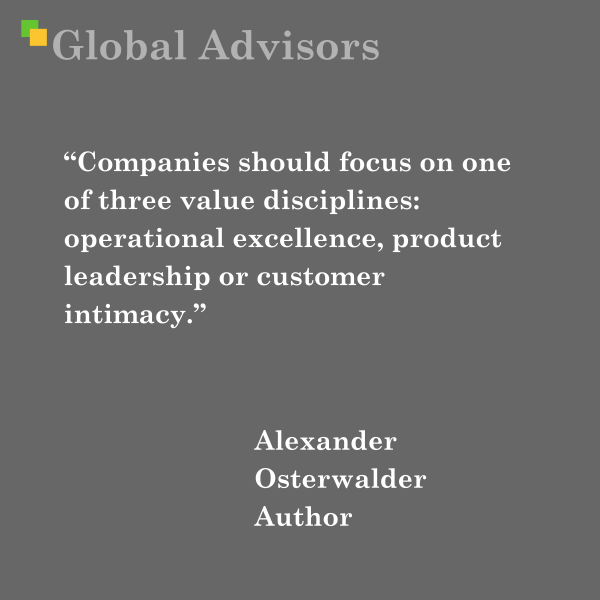
“Companies should focus on one of three value disciplines: operational excellence, product leadership, or customer intimacy.” - Alexander Osterwalder, Business Model Generation: A Handbook for Visionaries, Game Changers, and Challengers
The quote, “Companies should focus on one of three value disciplines: operational excellence, product leadership, or customer intimacy,” comes from Alexander Osterwalder’s influential work, Business Model Generation: A Handbook for Visionaries, Game Changers, and Challengers. This book, co-authored with Yves Pigneur and supported by hundreds of business practitioners worldwide, fundamentally reshaped how organizations approach designing, innovating, and understanding their business models.
Backstory and Context of the Quote
Osterwalder draws on the concept of value disciplines to guide organizations in carving out a distinct market position. The three value disciplines—operational excellence, product leadership, and customer intimacy—were popularized in strategic management as core focuses that companies should excel in to achieve competitive advantage. In Business Model Generation, Osterwalder emphasizes that sustainable success often requires unwavering commitment to one of these disciplines, rather than trying to excel in all three simultaneously. This focus enables an organization to align internal processes, culture, and strategy, thereby delivering superior value to customers in a way that competitors find difficult to replicate.
When Osterwalder speaks about value disciplines, he situates them within the broader context of the Business Model Canvas—a visual framework he developed to help organizations systematically map out how they create, deliver, and capture value. By identifying a primary value discipline, companies can design their business model to deliver on what matters most to their chosen customer segments—whether that’s unbeatable efficiency and low cost (operational excellence), cutting-edge and innovative products (product leadership), or deep, personalized relationships (customer intimacy).
This principle has resonated with business leaders, startups, and innovators globally, highlighting the importance of clear strategic focus as a foundation for building compelling customer value propositions and robust business models.
About Alexander Osterwalder
Alexander Osterwalder is a Swiss business theorist, author, and entrepreneur best known for developing the Business Model Canvas, a strategic tool used by millions of organizations worldwide. With a background in management information systems and a PhD from the University of Lausanne, Osterwalder has dedicated his career to making strategy and innovation tangible, practical, and accessible.
He co-authored Business Model Generation with Professor Yves Pigneur, a book that has been translated into over 30 languages and used as a standard reference in business schools and boardrooms alike. Osterwalder’s follow-up frameworks—such as the Value Proposition Canvas—further help organizations deeply align their offerings with customer needs, focusing on “jobs, pains, and gains” to design products and services that truly resonate.
Osterwalder’s work is characterized by its clarity, practicality, and visual approach to strategy. His tools bridge the gap between theoretical insight and hands-on application, enabling leaders to navigate business innovation with confidence and precision. Through his contributions, Osterwalder has empowered a new generation of visionaries and changemakers to reinvent how value is created in the modern economy

|
| |
| |
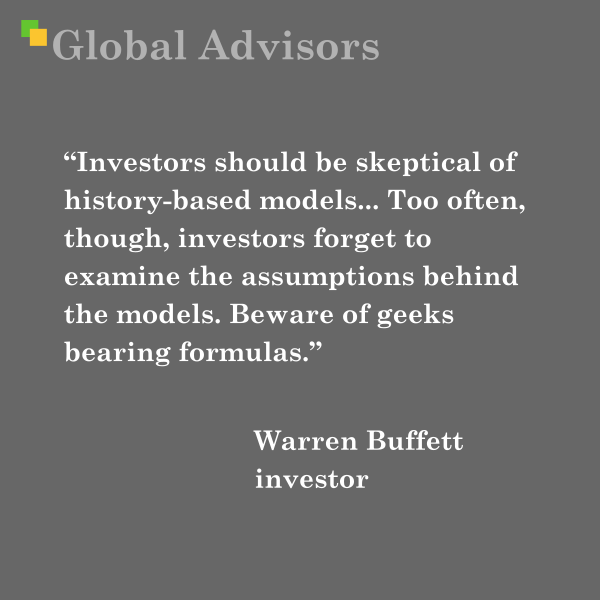
“Investors should be skeptical of history-based models... Too often, though, investors forget to examine the assumptions behind the models. Beware of geeks bearing formulas.” - Warren Buffet, Investor
The quote reflects Warren Buffett’s deeply pragmatic and experience-driven approach to investing. Buffett, widely regarded as one of the most successful investors of all time, has built his reputation on a disciplined method that values understanding businesses fundamentally over relying on complex quantitative models.
Buffett’s skepticism toward “history-based models” stems from his belief that numerical formulas—no matter how sophisticated—are only as good as the assumptions underlying them. These models often use statistical terms like beta, gamma, and sigma, which sound impressive but can obscure critical factors affecting a company’s future performance. He warns investors not to be seduced by formulas crafted by what he calls a “nerdy-sounding priesthood,” emphasizing the importance of knowing the meaning and context behind every symbol or number in an equation rather than blindly trusting them.
This perspective is rooted in Buffett’s longstanding investment philosophy: that success comes from investing in businesses with durable competitive advantages, competent management, and predictable long-term prospects—not from placing faith in past data or overengineered predictive tools. He advocates for disciplined fundamental analysis and warns against overreliance on models that assume the future will closely mirror the past—a dangerous assumption in markets characterized by uncertainty and change.
Buffett’s approach also embodies patience and common sense. His advice to “buy into a company because you want to own it, not because you want the stock to go up,” and to “draw a circle around businesses you understand,” reiterates his preference for simplicity and clarity over complexity and guesswork. By highlighting the risk of blindly trusting “geeks bearing formulas,” Buffett cautions investors to balance quantitative analysis with qualitative insight and critical thinking.
In essence, this quote is a timeless reminder that investing is as much an art as it is a science. While quantitative tools can provide useful information, they should never replace thorough, skeptical evaluation of a company’s true business fundamentals. Buffett’s wisdom encourages investors to question assumptions, understand what lies beneath the numbers, and prioritize sound judgment over flashy formulas.
Warren Buffett’s career and success amplify this message. As chairman and CEO of Berkshire Hathaway, he has famously rejected fads and complex financial engineering in favor of straightforward value investing principles. His practical, grounded approach has guided generations of investors to see beyond surface metrics and embrace a thoughtful, long-term view of investing.

|
| |
|