Select Page

Global Advisors | Quantified Strategy Consulting

Satya Nadella
Quote: Satya Nadella – Microsoft CEO

Quote: Satya Nadella – Microsoft CEO

“At scale, nothing is a commodity. We have to have our cost structure, supply-chain efficiency, and software efficiencies continue to compound to ensure margins. Scale – and one of the things I love about the OpenAI partnership – is it’s gotten us to scale. This is a scale game.” – Satya Nadella – Microsoft CEO

Satya Nadella has been at the helm of Microsoft since 2014, overseeing its transformation into one of the world’s most valuable technology companies. Born in Hyderabad, India, and educated in electrical engineering and computer science, Nadella joined Microsoft in 1992, quickly rising through the ranks in technical and business leadership roles. Prior to becoming CEO, he was best known for driving the rapid growth of Microsoft Azure, the company’s cloud infrastructure platform—a business now central to Microsoft’s global strategy.

Nadella’s leadership style is marked by systemic change—he has shifted Microsoft away from legacy, siloed software businesses and repositioned it as a cloud-first, AI-driven, and highly collaborative tech company. He is recognised for his ability to anticipate secular shifts—most notably, the move to hyperscale cloud computing and, more recently, the integration of advanced AI into core products such as GitHub Copilot and Microsoft 365 Copilot. His background—combining deep technical expertise with rigorous business training (MBA, University of Chicago)—enables him to bridge both the strategic and operational dimensions of global technology.

This quote was delivered in the context of Nadella’s public discussion on the scale economics of AI, hyperscale cloud, and the transformative partnership between Microsoft and OpenAI (the company behind ChatGPT, Sora, and GPT-4/5/6) on the BG2 podcast, 1st November 2025 In this conversation, Nadella outlines why, at the extreme end of global tech infrastructure, nothing remains a “commodity”: system costs, supply chain and manufacturing agility, and relentless software optimisation all become decisive sources of competitive advantage. He argues that scale—meaning not just size, but the compounding organisational learning and cost improvement unlocked by operating at frontier levels—determines who captures sustainable margins and market leadership.

The OpenAI partnership is, from Nadella’s perspective, a practical illustration of this thesis. By integrating OpenAI’s frontier models deeply (and at exclusive scale) within Azure, Microsoft has driven exponential increases in compute utilisation, data flows, and the learning rate of its software infrastructure. This allowed Microsoft to amortise fixed investments, rapidly reduce unit costs, and create a loop of innovation not accessible to smaller or less integrated competitors. In Nadella’s framing, scale is not a static achievement, but a perpetual game—one where the winners are those who compound advantages across the entire stack: from chip supply chains through to application software and business model design.

Theoretical Foundations and Key Thinkers

The quote’s themes intersect with multiple domains: economics of platforms, organisational learning, network effects, and innovation theory. Key theoretical underpinnings and thinkers include:

Scale Economics and Competitive Advantage

  • Alfred Chandler (1918–2007): Chandler’s work on the “visible hand” and the scale and scope of modern industrial firms remains foundational. He showed how scale, when coupled with managerial coordination, allows firms to achieve durable cost advantages and vertical integration.
  • Bruce Greenwald & Judd Kahn: In Competition Demystified (2005), they argue sustainable competitive advantage stems from barriers to entry—often reinforced by scale, especially via learning curves, supply chains, and distribution.

Network Effects and Platform Strategy

  • Jean Tirole & Marcel Boyer: Tirole’s work on platform economics shows how scale-dependent markets (like cloud and AI) naturally concentrate—network effects reinforce the value of leading platforms, and marginal cost advantage compounds alongside user and data scale.
  • Geoffrey Parker, Marshall Van Alstyne, Sangeet Paul Choudary: In their research and Platform Revolution, these thinkers elaborate how the value in digital markets accrues disproportionately to platforms that achieve scale—because transaction flows, learning, and innovation all reinforce one another.

Learning Curves and Experience Effects

  • The Boston Consulting Group (BCG): In the 1960s, Bruce Henderson’s concept of the “experience curve” formalised the insight that unit costs fall as cumulative output grows—the canonical explanation for why scale delivers persistent cost advantage.
  • Clayton Christensen: In The Innovator’s Dilemma, Christensen illustrates how technological discontinuities and learning rates enable new entrants to upend incumbent advantage—unless those incumbents achieve scale in the new paradigm.

Supply Chain and Operations

  • Taiichi Ohno and Shoichiro Toyoda (Toyota Production System): The industrial logic that relentless supply chain optimisation and compounding process improvements, rather than static cost reduction, underpin long-run advantage, especially during periods of rapid demand growth or supply constraint.

Economics of Cloud and AI

  • Hal Varian (Google, UC Berkeley): Varian’s analyses of cloud economics demonstrate the massive fixed-cost base and “public utility” logic of hyperscalers. He has argued that AI and cloud converge when scale enables learning (data/usage) to drive further cost and performance improvements.
  • Andrew Ng, Yann LeCun, Geoffrey Hinton: Pioneer practitioners in deep learning and large language models, whose work established the “scaling laws” now driving the AI infrastructure buildout—i.e., that model capability increases monotonically with scale of data, compute, and parameter count.

Why This Matters Now

Organisations at the digital frontier—notably Microsoft and OpenAI—are now locked in a scale game that is reshaping both industry structure and the global economy. The cost, complexity, and learning rate needed to operate at hyperscale mean that “commodities” (compute, storage, even software itself) cease to be generic. Instead, they become deeply differentiated by embedded knowledge, utilisation efficiency, supply-chain integration, and the ability to orchestrate investments across cycles of innovation.

Nadella’s observation underscores a reality that now applies well beyond technology: the compounding of competitive advantage at scale has become the critical determinant of sector leadership and value capture. This logic is transforming industries as diverse as finance, logistics, pharmaceuticals, and manufacturing—where the ability to build, learn, and optimise at scale fundamentally redefines what was once considered “commodity” business.

In summary: Satya Nadella’s words reflect not only Microsoft’s strategy but a broader economic and technological transformation, deeply rooted in the theory and practice of scale, network effects, and organisational learning. Theorists and practitioners—from Chandler and BCG to Christensen and Varian—have analysed these effects for decades, but the age of AI and cloud has made their insights more decisive than ever. At the heart of it: scale—properly understood and operationalised—remains the ultimate competitive lever.
read more
Quote: Satya Nadella, Chairman and CEO of Microsoft

Quote: Satya Nadella, Chairman and CEO of Microsoft

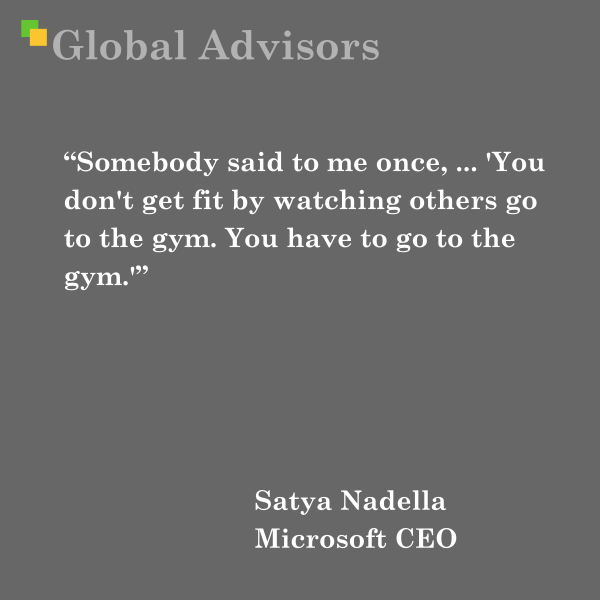
“Somebody said to me once, … ‘You don’t get fit by watching others go to the gym. You have to go to the gym.’” – Satya Nadella, the Chairman and CEO of Microsoft

The quote—“Somebody said to me once, … ‘You don’t get fit by watching others go to the gym. You have to go to the gym.’” — comes from an interview conducted immediately after Microsoft Build 2025, a flagship event that showcased the company’s vision for the agentic web and the next era of AI-powered productivity. Nadella used this metaphor to underscore a central pillar of his leadership philosophy: the necessity of hands-on engagement and personal transformation, rather than passive observation or reliance on case studies.

In the interview, Nadella reflected on how, during times of rapid technological change, the only way for organizations—and individuals—to adapt is through direct, committed participation. He emphasized that no amount of studying the successes of others can substitute for real-world experimentation, learning, and iteration. For Nadella, this approach is critical not only for businesses grappling with disruptive technologies, but also for professionals seeking to remain resilient and relevant.

Satya Nadella, Chairman and CEO of Microsoft, has long been recognized as the architect of Microsoft’s modern resurgence. Born in Hyderabad, India, in 1967, Nadella’s formative years combined a love for cricket with an early fascination for technology. He pursued electrical engineering in India before moving to the United States for graduate studies, laying the technical and managerial foundation that would define his career.

Joining Microsoft in 1992, Nadella rapidly advanced through various engineering and leadership roles. Early in his tenure, he played a key role in the development of Windows NT, setting the stage for his future focus on enterprise solutions. By the early 2010s, he had taken the helm of Microsoft’s cloud and enterprise initiatives, leading the creation and growth of Microsoft Azure—a service that would become a cornerstone of the company and one of the largest cloud platforms globally.

When he was appointed CEO in 2014, Microsoft faced a period of stagnation, with mounting internal competition, disappointing product launches, and declining morale. Nadella initiated a deliberate shift, championing a “cloud-first, mobile-first” strategy and transforming the company’s culture to prioritize collaboration, empathy, and a growth mindset. This new approach reinvigorated Microsoft, producing a decade of unprecedented innovation, market success, and making the company once again one of the world’s most valuable enterprises.

Announcements at Microsoft Build 2025

The Microsoft Build 2025 event marked a pivotal moment in the company’s AI strategy. Key announcements included:

  • The introduction of an “agentic web,” powered by collaborative AI agents embedded throughout the Microsoft ecosystem.
  • Deeper integration of AI into products like Microsoft 365 Copilot, Teams, and GitHub—enabling knowledge workers and developers to orchestrate complex workflows and automate repetitive tasks through AI-powered agents.
  • The rollout of Copilot fine-tuning, empowering enterprises to customize AI models with their proprietary data for a true competitive edge.
  • Demonstrations of “proactive agents” capable of autonomously interpreting intent and executing tasks across applications, further reducing the friction between user goals and technological execution.

These announcements illustrate the forward-leaning trajectory Nadella has set for Microsoft, blending technical prowess with an ethos of adaptability and continuous reinvention. His quote, situated in this context, is a rallying call: the future belongs to those willing to step into the arena, learn by doing, and transform alongside the technology they seek to harness.

read more
Quote: Satya Nadella, Chairman and CEO of Microsoft

Quote: Satya Nadella, Chairman and CEO of Microsoft

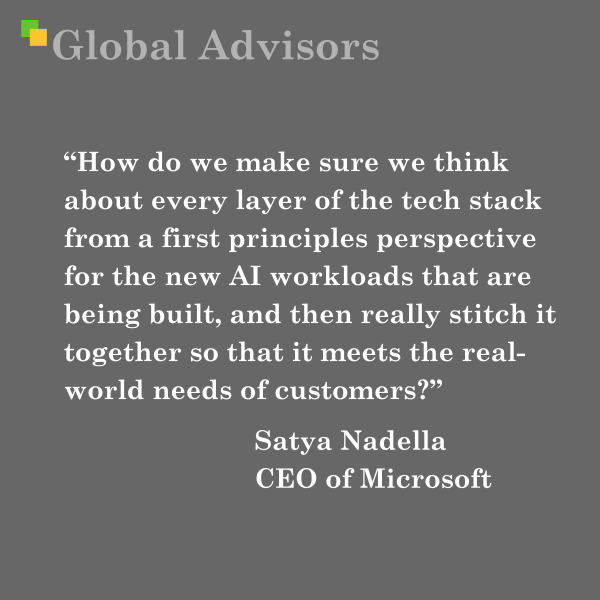
“How do we make sure we think about every layer of the tech stack from a first principles perspective for the new AI workloads that are being built, and then really stitch it together so that it meets the real-world needs of customers?” – Satya Nadella, the Chairman and CEO of Microsoft

The quote is from Satya Nadella, Microsoft CEO in an interview with Matthew Berman. The interview took place immediately after Microsoft Build 2025.


Satya Nadella, the Chairman and CEO of Microsoft, has been at the helm of the company since 2014, steering it through significant technological transformations. Under his leadership, Microsoft has embraced cloud computing, artificial intelligence (AI), and a more open-source approach, solidifying its position as a leader in the tech industry.

The quote in question was delivered during an interview with Rowan Cheung immediately following the Microsoft Build 2025 conference. Microsoft Build is an annual event that showcases the company’s latest innovations and developments, particularly in the realms of software development and cloud computing.

Microsoft Build 2025: Key Announcements and Context

At Microsoft Build 2025, held in Seattle, Microsoft underscored its deep commitment to artificial intelligence, with CEO Satya Nadella leading the event with a keynote emphasizing AI integration across Microsoft platforms.

A significant highlight was the expansion of Copilot AI in Windows 11 and Microsoft 365, introducing features like autonomous agents and semantic search. Microsoft also showcased new Surface devices and introduced its own AI models to reduce reliance on OpenAI.

In a strategic move, Microsoft announced it would host Elon Musk’s xAI model, Grok, on its cloud platform, adding Grok 3 and Grok 3 mini to the portfolio of third-party AI models available through Microsoft’s cloud services.

Additionally, Microsoft introduced NLWeb, an open project aimed at simplifying the development of AI-powered natural language web interfaces, and emphasized a vision of an “open agentic web,” where AI agents can perform tasks and make decisions for users and organizations.

These announcements reflect Microsoft’s strategic focus on AI and its commitment to providing developers with the tools and platforms necessary to build innovative, AI-driven applications.

read more
Quote: Satya Nadella, Chairman and CEO of Microsoft

Quote: Satya Nadella, Chairman and CEO of Microsoft

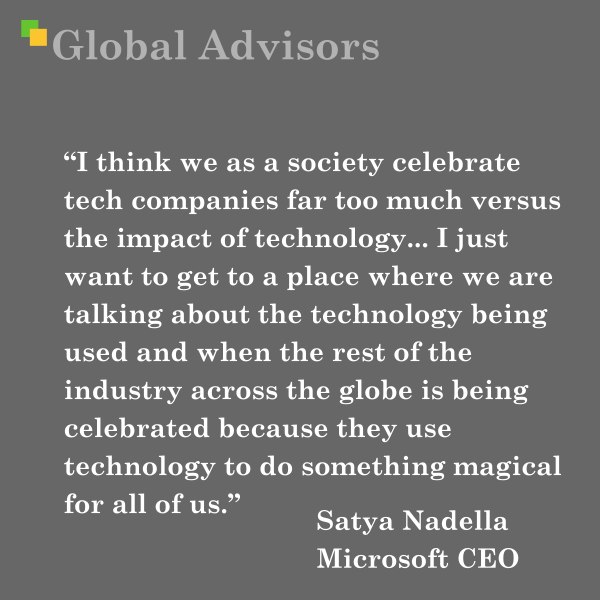
“I think we as a society celebrate tech companies far too much versus the impact of technology… I just want to get to a place where we are talking about the technology being used and when the rest of the industry across the globe is being celebrated because they use technology to do something magical for all of us, that would be the day.” – Satya Nadella, the Chairman and CEO of Microsoft

The quote is from Satya Nadella, Microsoft CEO in an interview with Rowan Cheung. The interview took place immediately after Microsoft Build 2025.


Satya Nadella, the Chairman and CEO of Microsoft, has been at the helm of the company since 2014, steering it through significant technological transformations. Under his leadership, Microsoft has embraced cloud computing, artificial intelligence (AI), and a more open-source approach, solidifying its position as a leader in the tech industry.

The quote in question was delivered during an interview with Rowan Cheung immediately following the Microsoft Build 2025 conference. Microsoft Build is an annual event that showcases the company’s latest innovations and developments, particularly in the realms of software development and cloud computing.

Microsoft Build 2025: Key Announcements and Context

At Microsoft Build 2025, held in Seattle, Microsoft underscored its deep commitment to artificial intelligence, with CEO Satya Nadella leading the event with a keynote emphasizing AI integration across Microsoft platforms.

A significant highlight was the expansion of Copilot AI in Windows 11 and Microsoft 365, introducing features like autonomous agents and semantic search. Microsoft also showcased new Surface devices and introduced its own AI models to reduce reliance on OpenAI.

In a strategic move, Microsoft announced it would host Elon Musk’s xAI model, Grok, on its cloud platform, adding Grok 3 and Grok 3 mini to the portfolio of third-party AI models available through Microsoft’s cloud services.

Additionally, Microsoft introduced NLWeb, an open project aimed at simplifying the development of AI-powered natural language web interfaces, and emphasized a vision of an “open agentic web,” where AI agents can perform tasks and make decisions for users and organizations.

These announcements reflect Microsoft’s strategic focus on AI and its commitment to providing developers with the tools and platforms necessary to build innovative, AI-driven applications.

read more
Quote: Satya Nadella

Quote: Satya Nadella

“AI will make us more human, not less.”

Satya Nadella
Microsoft CEO

read more

Download brochure

Introduction brochure

What we do, case studies and profiles of some of our amazing team.

Download

Our latest podcasts on Spotify

Sign up for our newsletters - free

Global Advisors | Quantified Strategy Consulting